

Umbilical Cord Stem Cells in Anti-Aging Medicine
Umbilical cord mesenchymal stem cells (UC-MSCs) are showing promise in anti-aging medicine. These stem cells, sourced from umbilical cord tissue after childbirth, are biologically younger than adult stem cells. This gives them longer telomeres, faster growth, and no accumulated cellular damage, making them effective for tissue repair and regeneration.
Key benefits include:
- Reducing chronic inflammation: UC-MSCs suppress inflammatory markers like TNF-α and boost anti-inflammatory molecules such as IL-10.
- Combating oxidative stress: They neutralize harmful reactive oxygen species (ROS) and protect DNA and proteins from damage.
- Skin repair: UC-MSCs stimulate collagen and elastin production, reversing UV damage and improving skin elasticity.
- Brain health: By releasing neurotrophic factors, they support neuron survival and reduce neuroinflammation.
- Joint and bone health: UC-MSCs promote cartilage regeneration and improve joint mobility.
Banking cord blood, tissue, and placenta at birth ensures they remain in their most effective state for future use. Services now also offer exosome storage, capturing bioactive molecules for cell-free therapies. Ethical collection methods and low rejection risks make UC-MSCs a safe option for advancing anti-aging treatments.
How Umbilical Cord Stem Cells Work Against Aging
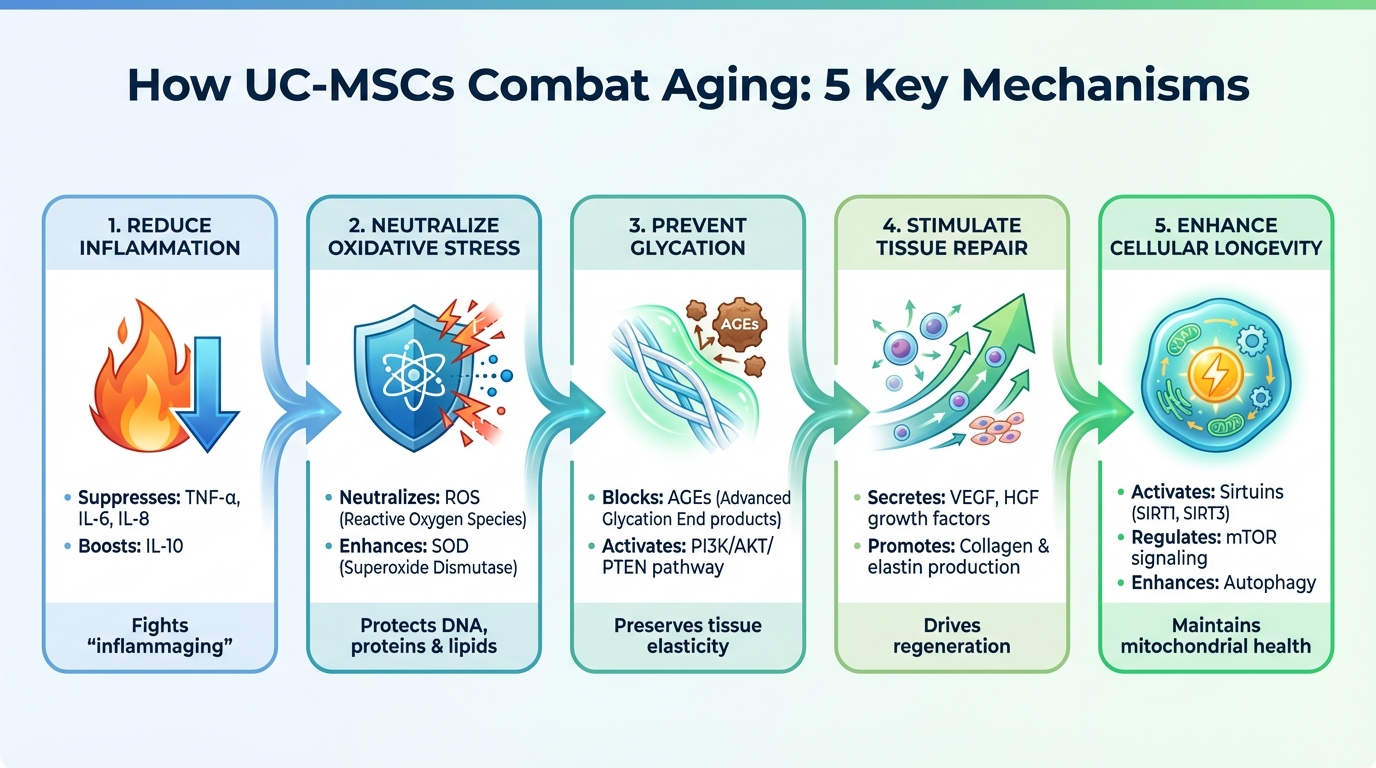
How Umbilical Cord Stem Cells Combat Aging: 5 Key Mechanisms
Biological Processes of UC-MSCs
Umbilical cord mesenchymal stem cells (UC-MSCs) fight aging through a series of biological processes aimed at repairing and protecting cells. One of their standout features is their ability to reduce chronic inflammation, often referred to as "inflammaging." They achieve this by suppressing pro-inflammatory cytokines like TNF-α, IL-6, and IL-8, while boosting anti-inflammatory molecules such as IL-10. This helps curb the inflammation that speeds up tissue breakdown over time.
UC-MSCs also act as powerful antioxidants. They neutralize harmful reactive oxygen species (ROS) and enhance the activity of protective enzymes like superoxide dismutase (SOD). This defense shields critical cellular components - like DNA, proteins, and lipids - from oxidative damage, a key contributor to aging.
Another important function is their ability to combat glycation. Glycation leads to the formation of Advanced Glycation End products (AGEs), which weaken collagen and reduce tissue resilience. UC-MSCs protect fibroblasts - the cells responsible for producing collagen - by activating the PI3K/AKT/PTEN signaling pathway, preserving skin elasticity and structural integrity. On top of that, UC-MSCs secrete growth factors such as VEGF and HGF, which drive tissue repair by stimulating collagen and elastin production, encouraging dermal fibroblast growth, and improving blood flow to damaged tissues.
These combined actions explain why UC-MSCs show promise in addressing various age-related challenges.
Benefits for Age-Related Conditions
The regenerative capabilities of UC-MSCs offer real benefits for a variety of age-related conditions. For example, when it comes to skin health, ultraviolet (UV) radiation is responsible for about 80% of facial aging. UC-MSCs help reverse this damage by enhancing the production of extracellular matrix components like collagen and elastin. Considering that collagen production in human skin naturally declines by 1% to 1.5% per year as we age, this boost can make a significant difference.
In cardiovascular health, the RIMECARD trial - a Phase 1/2 study led by Bartolucci et al. - showed that patients with heart failure experienced notable improvements in left ventricular function and overall heart performance after receiving intravenous UC-MSC treatments. Similarly, research by Matas et al. highlighted the benefits of UC-MSCs for knee osteoarthritis. Patients who received intraarticular injections reported reduced pain and better joint mobility, with MRI scans confirming cartilage regeneration.
Beyond these specific conditions, UC-MSCs also support cellular longevity. They activate Sirtuins (SIRT1, SIRT3), which are essential for maintaining mitochondrial health, and regulate mTOR signaling to enhance autophagy - a natural process that clears out damaged cellular components. Together, these mechanisms contribute to healthier, more resilient cells as we age.
Medical Uses of Umbilical Cord Stem Cells
Skin Rejuvenation and UV Damage Repair
Umbilical cord mesenchymal stem cells (UC-MSCs) play a role in combating skin aging by releasing bioactive factors that stimulate skin cells. These factors encourage the production of collagen and elastin, which are essential for keeping skin firm and elastic.
Research from Sichuan University highlighted the protective effects of a concentrated UC-MSC supernatant (CHS) against UVB damage. The study found that CHS reduced skin thickness, reversed hyperkeratosis, and preserved immune function by preventing thymus atrophy in UV-exposed mice. Another study conducted by Peking Union Medical College in 2025 demonstrated that UC-MSC-derived vesicles significantly improved skin hydration, collagen levels, and elasticity in models of photoaging.
UC-MSCs repair skin through several mechanisms. They activate autophagy - a process that clears out damaged proteins and organelles to prevent cell death - and enhance antioxidant defenses by boosting superoxide dismutase (SOD) levels. At the same time, they lower inflammatory markers like TNF-α, IL-1β, and IL-6. These combined effects not only benefit the skin but also suggest potential applications in other areas of the body.
Brain Health and Cognitive Function
UC-MSCs also show promise in supporting brain health by releasing neurotrophic factors, such as Nerve Growth Factor (NGF), which is crucial for neuron survival and function. Their anti-inflammatory properties help reduce neuroinflammation, a key factor in cognitive decline.
Rather than replacing damaged brain cells, UC-MSCs work through paracrine signaling, creating a more supportive environment for brain tissue. They suppress pro-inflammatory cytokines like TNF-α, IL-1β, and IL-6, which are linked to neural damage. Additionally, these cells enhance antioxidant defenses by increasing SOD levels, helping to neutralize free radicals and protect neural tissues from oxidative stress. They also guard against mitochondrial dysfunction, which can produce harmful reactive oxygen species (ROS) and accelerate cell aging.
As of December 2023, more than 400 clinical trials have been registered to explore the therapeutic potential of UC-MSCs, underlining the growing interest in their applications for brain health and anti-aging therapies.
Joint and Bone Health
UC-MSCs have the ability to differentiate into bone-forming osteoblasts and cartilage-producing chondrocytes in lab conditions. However, their real-world benefits for joint and bone health primarily stem from the growth factors and cytokines they release. These secretions promote tissue regeneration and reduce chronic inflammation, which are crucial for maintaining healthy joints and bones.
Clinical trials have shown that UC-MSCs can improve mobility and joint function, highlighting their regenerative effects on musculoskeletal issues. Because they originate from newborn stem cells, UC-MSCs have a higher capacity for proliferation and yield better therapeutic results compared to stem cells from older sources like bone marrow or fat. Interestingly, their low engraftment rate (under 3%) suggests their benefits are largely due to their ability to lower systemic inflammation.
These properties make UC-MSCs a promising option for addressing age-related musculoskeletal challenges and advancing anti-aging treatments.
Why Stem Cell Banking Matters for Anti-Aging
Benefits of Banking Cord Blood and Cord Tissue
Preserving stem cells at birth ensures they are stored in their most effective state. Unlike adult stem cells from sources like bone marrow or fat tissue, cord-derived stem cells remain untouched by the aging process. These cells feature longer telomeres, which help delay cellular aging.
Research shows that patients treated with early-passage mesenchymal stem cells (MSCs) from the first or second generation had a 75% one-year survival rate. In contrast, those receiving later-generation cells (third or fourth) saw survival rates drop to just 21%. Banking stem cells at birth captures them before telomeres shorten significantly, safeguarding their regenerative potential for years to come.
Cord tissue banking is particularly valuable because it preserves mesenchymal stem cells (UC-MSCs) found in Wharton’s jelly, a substance within the umbilical cord. These cells are highly beneficial for anti-aging treatments due to their low immunogenicity - they express minimal MHC class II antigens, which reduces the risk of rejection in future therapies. Stored cord blood has proven its longevity, with successful use even after 18 years in storage.
Americord Registry provides advanced preservation services for both cord blood and cord tissue. Their CryoMaxx™ Processing technology and 5-compartment storage vials are designed to maintain cell viability for future treatments. If you’re considering this option, it’s best to contact a cord blood bank at least six weeks before your due date to arrange for collection kits and screenings.
Adding to the benefits of cord blood and tissue banking, exosome banking has emerged as a promising new option for anti-aging therapies.
New Development: Exosome Banking
Exosome banking is an exciting advancement in regenerative medicine. These tiny vesicles, ranging from 40 to 160 nanometers, are packed with bioactive molecules secreted by UC-MSCs. They include growth factors, anti-inflammatory cytokines, and microRNAs like miR-1246, which plays a role in reducing wrinkles by slowing collagen breakdown.
Unlike whole cells, exosomes come with no risk of tumor formation. They can be stored through lyophilization or cryopreservation without losing their effectiveness. Exosomes also easily penetrate the skin barrier and activate the body’s natural repair mechanisms. Americord Registry now includes exosome banking in their Ultimate Family Plan and Maximum Family Plan, enabling families to preserve both newborn and maternal exosomes for future anti-aging treatments.
Safety, Ethics, and Practical Factors
Strong safety measures and ethical practices play a key role in the growing use of UC-MSCs for anti-aging treatments.
Safety Profile and Low Risk
UC-MSCs are known for their low immunogenicity, meaning they rarely trigger immune rejection. Unlike bone marrow transplants, which require strict human leukocyte antigen (HLA) matching, UC-MSCs can be used without full matching. This makes them more accessible to individuals from a variety of ethnic backgrounds.
Since 1988, over 40,000 umbilical cord blood transplants have been performed globally. The risk of acute Graft-Versus-Host Disease (GVHD) following these transplants ranges from 20% to 40%, while chronic GVHD occurs in just 10–20% of cases - significantly lower rates compared to other stem cell sources. In the CRATUS Phase I trial for aging frailty, researchers reported no serious adverse events related to the therapy and clinical trials and no signs of T-cell activation even after six months.
Accredited stem cell banks adhere to rigorous standards set by organizations like the Foundation for the Accreditation of Cellular Therapies (FACT) and the AABB. These standards ensure sterility and reduce contamination risks. When choosing a banking service, it’s crucial to confirm that the facility holds these accreditations, as they guarantee proper processing and storage of stem cells.
Ethical Collection Methods
Ethical collection practices further enhance the appeal of UC-MSC therapies. Unlike embryonic stem cells, UC-MSCs are collected without raising ethical concerns. They are harvested from the placenta and umbilical cord only after the baby is born and the cord has been clamped and cut. As Dr. Jessica M. Sun, a Pediatric Hematologist/Oncologist at Duke Children's, explains:
"Umbilical cord blood can be collected without risk to the mother or infant donor."
Because umbilical cords are usually discarded as medical waste, using them for stem cell extraction is straightforward from an ethical standpoint. The process involves obtaining the mother’s informed consent, which includes reviewing medical records, family history, and conducting infection testing. These high ethical standards ensure that regenerative treatments remain both scientifically advanced and trustworthy for anti-aging applications.
Conclusion: The Future of Anti-Aging Medicine with Umbilical Cord Stem Cells
Anti-aging medicine is advancing quickly, and umbilical cord mesenchymal stem cells (UC-MSCs) are leading the charge. These cells, often described as "younger" stem cells, bring unique benefits like higher proliferation rates, longer telomeres, and enhanced regenerative abilities - qualities that set them apart from adult stem cell sources.
UC-MSCs are reshaping the way we approach aging. Once seen primarily as tools for cell replacement, they are now recognized as "medicinal signaling cells" that combat inflammation, repair damaged tissues, and enhance organ function. This new perspective is driving the development of therapies that go beyond traditional methods. For example, exosome and secretome-based treatments are emerging as promising cell-free options, offering similar benefits with fewer risks.
For families, banking umbilical cord stem cells at birth is becoming an essential step toward future-proofing their access to regenerative therapies. Cryopreservation ensures these cells remain viable for decades, serving as a form of biological insurance. Companies like Americord Registry provide services to store cord blood, cord tissue, placental tissue, and even exosomes, giving families a wide range of options to prepare for future medical breakthroughs.
While the need for one's own blood stem cells is rare (less than 1 in 20,000 cases), their potential applications extend far beyond traditional uses. Parents should discuss stem cell banking with their obstetric provider well in advance - ideally at least six weeks before their due date - and ensure the chosen facility is accredited by AABB or FACT for quality and safety.
FAQs
What’s the difference between cord blood and cord tissue stem cells for anti-aging?
Cord blood stem cells are hematopoietic stem cells, which are responsible for producing blood and immune cells. These cells are primarily used in treatments for blood-related conditions. On the other hand, cord tissue stem cells are mesenchymal stromal cells known for their regenerative abilities. They are often explored for uses like anti-aging therapies and skin rejuvenation.
Are UC-MSC anti-aging treatments FDA-approved in the U.S.?
No, UC-MSC (umbilical cord mesenchymal stem cell) treatments for anti-aging are not approved by the FDA in the United States.
What does exosome banking add beyond stem cell banking?
Exosome banking offers a way to store stem cell-derived exosomes - tiny signaling molecules that play a crucial role in promoting tissue repair and regeneration. These exosomes present therapeutic possibilities that extend beyond what stem cell banking can achieve, broadening the horizons of regenerative medicine.
The views, statements, and pricing expressed are deemed reliable as of the published date. Articles may not reflect current pricing, offerings, or recent innovations.


