

Umbilical Cord Stem Cells for Sports Injuries
Umbilical cord stem cells are changing how sports injuries are treated. These cells, collected safely after childbirth, have shown promise in repairing tendons, ligaments, and even chronic conditions like osteoarthritis. Here's why they matter:
- Faster Tissue Repair: They stimulate the growth of Type I collagen, crucial for tendons and ligaments, and reduce inflammation.
- Minimally Invasive: Unlike surgeries, stem cell injections avoid long recovery times and complications.
- Better Outcomes: Studies show lower re-injury rates and improved long-term healing compared to traditional treatments.
- Versatile Applications: Effective for ACL tears, rotator cuff injuries, tennis elbow, and more.
Clinical trials confirm their safety and effectiveness, making them a promising option for athletes. Stem cell banking services, like those offered by Americord, ensure families can access these treatments in the future. For parents, preserving newborn stem cells at birth could be a smart step toward potential therapies down the road.
How Umbilical Cord Stem Cells Treat Common Sports Injuries
Umbilical cord stem cells (UC-MSCs) play a powerful role in speeding recovery and supporting long-term healing for sports injuries. They work by reducing inflammation, encouraging new blood vessel growth, and transforming into specialized cells that repair damaged tissues. These functions are particularly beneficial for treating tendon, ligament, and other common injuries.
Tendon Injuries: Achilles Tendon and Rotator Cuff
Tendon injuries make up 30% to 50% of sports-related injuries worldwide, but their healing process is notoriously slow due to poor blood supply. UC-MSCs can transform into tenocytes, which are tendon-specific cells that produce critical proteins like Scleraxis (SCX), Mohawk (MKX), and Tenascin-C (TNC) - all essential for healthy tendon structure.
A study from July 2023 demonstrated the impact of UC-MSCs on rats with full-thickness rotator cuff tears. The results showed that UC-MSCs formed a well-organized, tendon-like structure and significantly reduced tissue degeneration after just 2 and 4 weeks. Compared to bone marrow-derived cells, UC-MSCs produced 6.01 times more Type I collagen and 5.92 times higher levels of Mohawk gene expression, both of which are critical for tendon repair.
Treatment options for tendon injuries include direct surgical application of UC-MSCs, stem cell-coated sutures, or ultrasound-guided injections directly into the injury site. A 2025 study published in the Journal of Tissue Engineering used single-cell RNA sequencing to confirm that UC-MSCs successfully transformed into functional tendon cells over a 14-day period, with increased production of key tendon proteins.
Ligament Tears: ACL and MCL Injuries
Anterior cruciate ligament (ACL) tears are a common sports injury, occurring at rates of 30 to 78 cases per 100,000 person-years. In the U.S. alone, around 100,000 ACL reconstruction surgeries are performed annually. However, traditional surgical methods often result in weaker scar tissue at the graft-tunnel interface. While 83%–89% of athletes return to sports, only 45%–63% regain their pre-injury performance levels.
UC-MSC therapy offers a promising alternative by regenerating tissue similar to the original ligament, such as Sharpey's fibers at the tendon-bone interface. These cells can be delivered through intra-articular injections, applied with hyaluronic acid hydrogel at the injury site, or seeded onto bioengineered scaffolds. Since UC-MSCs are allogeneic, they eliminate the need for invasive procedures like bone marrow aspiration or fat collection.
Clinical trials have shown encouraging results. In one study, a single injection of 75 million allogeneic mesenchymal precursor cells improved KOOS (Knee Injury and Osteoarthritis Outcome Score) over a 24-month period. Another 2-year study on ACL reconstruction reported no adverse effects related to the treatment.
Other Injuries: Tennis Elbow and Osteoarthritis
UC-MSCs also show potential in treating chronic conditions like tennis elbow (lateral epicondylitis) and osteoarthritis. For tennis elbow, pilot studies have reported significant reductions in pain and structural damage after 52 weeks. These benefits come from the cells’ ability to suppress inflammatory mediators like IL-1 and TNFα, while simultaneously promoting blood vessel growth and reducing fibrosis.
Osteoarthritis, which affects over 27% of retired football players, is another area where UC-MSCs shine. A randomized controlled trial involving ACL reconstruction patients found that a combination of allogeneic MSCs and hyaluronic acid helped preserve joint space and reduce cartilage damage. Given that tendon and ligament injuries make up nearly 30% of musculoskeletal consultations, these findings are particularly relevant. Lab studies further highlight UC-MSCs’ effectiveness, showing a 4.22-fold increase in tendon-like matrix formation compared to bone marrow-derived stem cells. This makes them a promising option for chronic tendinopathies and degenerative joint conditions.
Advantages of Stem Cell Therapy Over Standard Treatments
Faster Recovery and Lower Risks
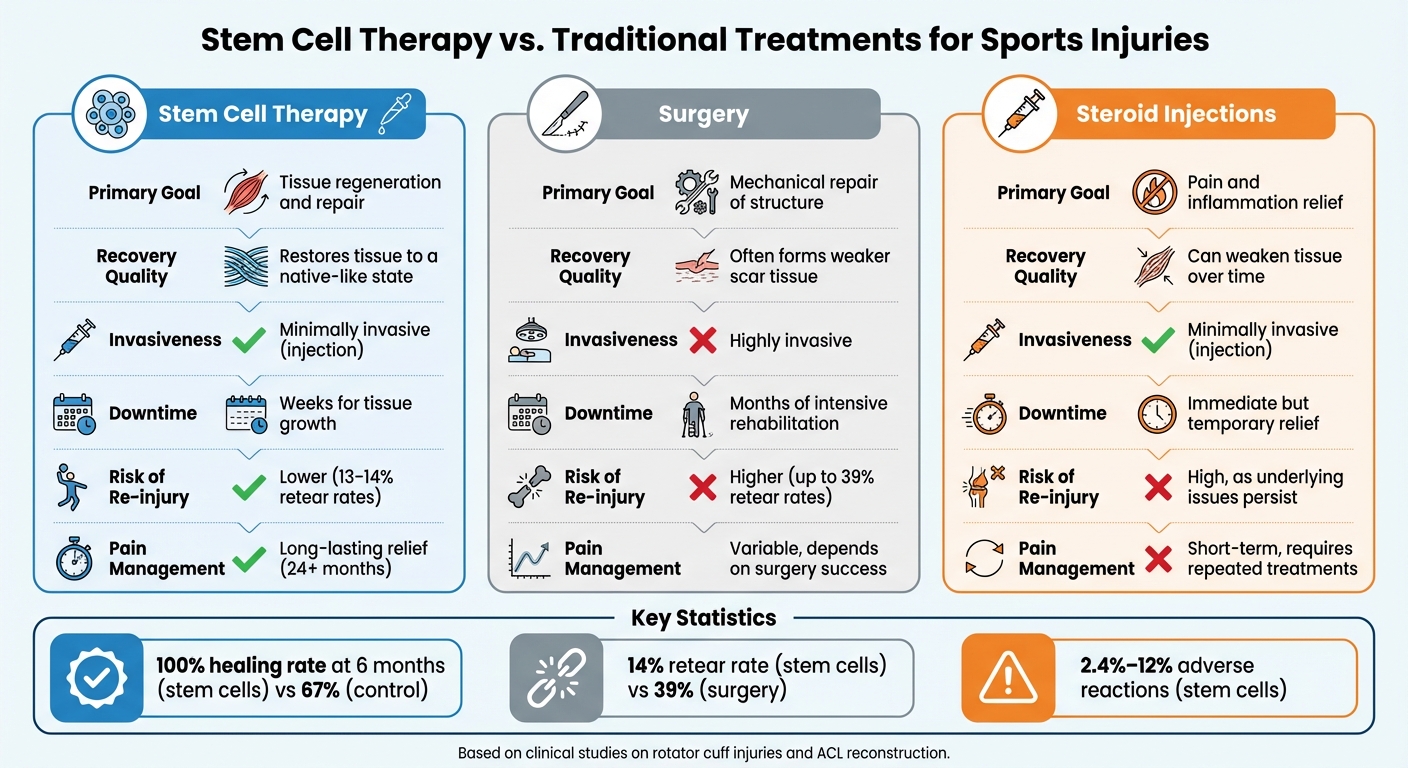
Stem cell therapy provides a less invasive option compared to traditional surgical procedures. Surgery often involves incisions, anesthesia, and lengthy recovery periods, while stem cell injections are relatively straightforward and come with much shorter downtime. For instance, athletes treated with stem cells can often return to light activity within weeks instead of being out for months.
The risks also differ significantly. Surgical procedures carry potential complications such as infections, scarring, and issues at graft harvest sites. On the other hand, adverse reactions to stem cell injections are typically mild and occur in only 2.4% to 12% of cases. Unlike steroid injections, which can weaken tissues over time and require repeated treatments, umbilical cord blood stem cells actively aid in tissue regeneration, strengthening the affected area.
"An ongoing challenge in ligament surgery is the relatively avascular nature of the tissue being manipulated, with little innate ability for healing." - Mario Hevesi, Department of Orthopedic Surgery, Mayo Clinic
Long-Term Healing and Pain Relief
Traditional treatments, including NSAIDs and corticosteroid injections, mainly focus on masking symptoms without addressing the root cause of tissue damage. In fact, anti-inflammatory drugs can interfere with the body’s natural healing processes. Stem cell therapy, however, goes beyond symptom relief by promoting actual tissue regeneration.
The outcomes are striking. For example, in studies on rotator cuff injuries, patients treated with stem cells achieved a 100% healing rate at 6 months, compared to just 67% in control groups. Additionally, the retear rate for stem cell-treated patients was significantly lower - 14% versus 39% for those undergoing standard surgical repairs. These benefits extend over the long term, with many patients experiencing reduced pain and improved function for 24 months or more.
Comparison Table: Stem Cell Therapy vs. Standard Treatments
| Feature | Stem Cell Therapy | Surgery | Steroid Injections |
|---|---|---|---|
| Primary Goal | Tissue regeneration and repair | Mechanical repair of structure | Pain and inflammation relief |
| Recovery Quality | Restores tissue to a native-like state | Often forms weaker scar tissue | Can weaken tissue over time |
| Invasiveness | Minimally invasive (injection) | Highly invasive | Minimally invasive (injection) |
| Downtime | Weeks for tissue growth | Months of intensive rehabilitation | Immediate but temporary relief |
| Risk of Re-injury | Lower (13–14% retear rates) | Higher (up to 39% retear rates) | High, as underlying issues persist |
| Pain Management | Long-lasting relief (24+ months) | Variable, depends on surgery success | Short-term, requires repeated treatments |
Clinical Studies and Evidence for Stem Cell Therapy
Research on Tendon and Ligament Repair
Clinical trials highlight the potential of stem cell therapy for repairing sports-related tendon and ligament injuries, emphasizing both safety and effectiveness. One notable study, conducted by Samsung Medical Center from January to April 2014 and led by Dr. Joon Ho Wang, involved 30 patients aged 20–50 with ACL ruptures. The experimental group received 7.5 × 10⁶ allogeneic hUCB-MSCs combined with 60 mg of hyaluronic acid during double-bundle ACL reconstruction. Results from a 2-year follow-up showed no adverse events or tumor formation in the treatment group. Additionally, these patients demonstrated significantly improved anterior stability (p = 0.010).
"Allogeneic hUCB-MSCs were used safely for ACL reconstruction without treatment-related adverse event in a 2-year follow-up."
- Sang Won Moon, Department of Orthopaedic Surgery, Inje University Haeundae Paik Hospital
Further supporting these findings, a 2017 double-blind randomized controlled trial by the University of Melbourne and St. Vincent's Hospital examined 17 patients undergoing ACL reconstruction. Participants received either a single injection of 75 million allogeneic mesenchymal precursor cells with hyaluronic acid or hyaluronic acid alone. MRI results showed better joint space preservation and reduced cartilage degradation in the stem cell-treated group. Laboratory research also found that umbilical cord–derived MSCs outperform bone marrow–derived MSCs in tendon matrix formation, achieving a 4.22-fold increase in organized tendon-like matrix development.
These studies not only validate the repair capabilities of stem cell therapies but also pave the way for further exploration into their role in improving overall recovery and performance for athletes.
Athlete Recovery and Performance Results
Athletes treated with umbilical cord stem cell therapy report improved pain relief and quality of life. For instance, the study by Wang et al. demonstrated significantly higher Knee Injury and Osteoarthritis Outcome Scores (KOOS) and SF-36 pain scores over 24 months compared to control groups.
In the case of cartilage injuries, a Phase III randomized controlled trial led by Lim et al. between 2015 and 2021 studied 73 patients with full-thickness cartilage defects. Patients treated with umbilical cord blood–derived MSCs and hyaluronic acid showed impressive results, with 97.7% experiencing structural improvement at 48 weeks. Long-term follow-ups at 3 and 5 years confirmed that these outcomes were statistically superior to those achieved through standard microfracture procedures.
"Clinical application of MSCs for treatment of tendon and ligament injuries might be good alternative option for athletes. Published clinical studies confirmed clinical improvement and integrity of impaired tissues."
- Suad Trebinjac, MD, PhD, FIFA Medical Centre of Excellence
Americord Registry's Role in Preserving Stem Cells for Future Use
With umbilical cord stem cells showing promise in repairing sports injuries, preserving these cells has become a vital step toward future medical advancements.
Stem Cell Banking Services
Americord Registry specializes in newborn stem cell banking, aimed at future therapies for sports injuries and regenerative treatments. Their services include cord blood banking, which stores hematopoietic stem cells, and cord tissue banking, which preserves mesenchymal stem cells. These mesenchymal stem cells are the same type highlighted in clinical studies for repairing tendons and ligaments.
In addition to these, Americord offers placental tissue banking and exosome preservation. Exosomes are particularly exciting for sports medicine because they carry the signaling molecules that promote tissue repair - without the need for live cells. Parents can choose plans tailored to their needs, such as the Essential Family Plan (cord blood only) or the Maximum Family Plan, which includes cord blood, cord tissue, placental tissue, and both newborn and maternal exosome banking.
CryoMaxx™ Processing and Long-Term Viability
Americord's CryoMaxx™ Processing technology is designed to preserve the highest number of viable stem cells during freezing. This advanced method ensures that the cells retain their regenerative properties for years. While the exact lifespan of cryopreserved cells remains unknown, successful transplants have been performed with cord blood stored for 18 years.
The company also uses 5-compartment storage vials, which allow for partial use of a cord blood unit without thawing the entire sample. This setup ensures that families can access precise therapeutic doses while keeping additional cells intact for future needs.
How Families Can Benefit from Future Applications
Banked stem cells act as a form of biological insurance, offering families immediate access to cutting-edge regenerative treatments as they become available. With advancements in regenerative medicine, having these cells stored ensures families are prepared for emerging therapies.
To make the most of this opportunity, parents should plan ahead and discuss cord blood and tissue banking with their healthcare provider at least six weeks before the due date. This ensures that the brief collection window at birth isn’t missed, securing these valuable stem cells for potential future use.
Conclusion
Umbilical cord stem cells are making waves in sports injury treatment by significantly boosting tendon repair markers - like increasing scleraxis levels by 3.12 times and type I collagen by 6.01 times[1]. Beyond that, they help control inflammation, prevent muscle loss, and activate the body’s natural repair mechanisms, making them a powerful tool for athlete recovery.
Cord tissue mesenchymal stem cells work through paracrine signaling, releasing growth factors that shift the immune system's response from inflammatory to reparative. This approach targets the root of tissue damage, promoting long-term healing.
Key Takeaways
Umbilical cord stem cells have the potential to revolutionize recovery from sports injuries, setting a new standard in sports medicine.
Banking these cells ensures access to advanced regenerative treatments. Since 1988, over 40,000 cord blood procedures have been performed worldwide, showcasing a strong track record for stem cell applications. Compared to adult stem cells, umbilical cord stem cells offer unique advantages, such as immune-privileged status, longer telomeres, and a higher capacity for replication.
Americord Registry provides comprehensive banking services, including CryoMaxx™ Processing, which ensures high cell viability for future use. For parents considering this option - especially those planning for future athletes - consulting with a healthcare provider at least six weeks before the due date is essential to ensure the collection process is seamless.
These developments highlight a shift in how sports injuries are treated, emphasizing the importance of early stem cell banking for long-term benefits.
[1] Source: Research data on tenogenic differentiation in UC-MSCs.
FAQs
Who can use umbilical cord stem cells for sports injuries?
Individuals dealing with sports injuries, including damage to tendons, ligaments, muscles, or cartilage, might find relief through the use of umbilical cord stem cells. Specifically, mesenchymal stem cells derived from cord tissue have shown potential to aid in healing, ease inflammation, and encourage tissue repair. These cells are often explored as a treatment option for issues like Achilles tendinitis, ACL tears, or rotator cuff injuries. It’s important to consult a healthcare provider to see if this approach aligns with your specific condition.
How do stem cell injections compare to surgery for healing time?
Stem cell injections, such as those derived from umbilical cord blood, work by promoting gradual tissue regeneration. This approach can sometimes help patients avoid surgery, but it's not a quick fix for situations where immediate structural support is essential. In contrast, surgery offers a faster solution for mechanical repair but often comes with extended recovery periods. Stem cell treatments, on the other hand, aim to boost the body's natural healing processes over time, making them particularly useful for injuries to tendons and ligaments.
How does cord blood or tissue banking help with future sports injuries?
Banking umbilical cord blood or tissue could be a game-changer for treating sports injuries. Stem cells, particularly mesenchymal stem cells found in cord tissue, play a key role in repairing tendons, ligaments, and muscles. By storing these cells early, individuals may have access to regenerative therapies that can speed up healing, shorten recovery periods, and enhance the results for injuries like torn ligaments or cartilage damage.
The views, statements, and pricing expressed are deemed reliable as of the published date. Articles may not reflect current pricing, offerings, or recent innovations.


