

Fall Immunity Guide: Protecting You and Your Baby This Autumn
If you're pregnant, fall virus season can hit harder. The short version: get your flu shot, stay up to date on COVID-19, get Tdap at 27 to 36 weeks, ask about the RSV vaccine at 32 to 36 weeks during the U.S. fall/winter season, and have a clear plan for symptoms, sick family members, and newborn visitors.
Here’s what I’d focus on right away:
- Pregnancy changes your immune system, lungs, and heart, which can make respiratory infections harder on your body.
- Pregnant people are about 3 times more likely to be hospitalized with flu than nonpregnant women of the same age.
- Vaccines during pregnancy help protect both you and your baby because antibodies can pass through the placenta before birth.
- Daily basics still matter: sleep 7 to 9 hours, drink 64 to 96 ounces of fluids, and aim for 150 minutes of moderate activity each week if your provider says it’s okay.
- Cut exposure indoors with handwashing, better airflow, and a well-fitted N95 or KF94 in high-risk places.
- Call your provider the same day for a fever of 100.4°F or higher during pregnancy.
- Get urgent help for trouble breathing, chest pain, confusion, dehydration, decreased fetal movement, or a fever of 102°F or higher that does not improve with acetaminophen.
This comes down to a simple plan: vaccines, daily habits, lower germ exposure, fast action when symptoms start, and clear rules before your baby comes home.
I’d use this guide as a simple fall checklist for pregnancy.
Get the right fall vaccines at the right time
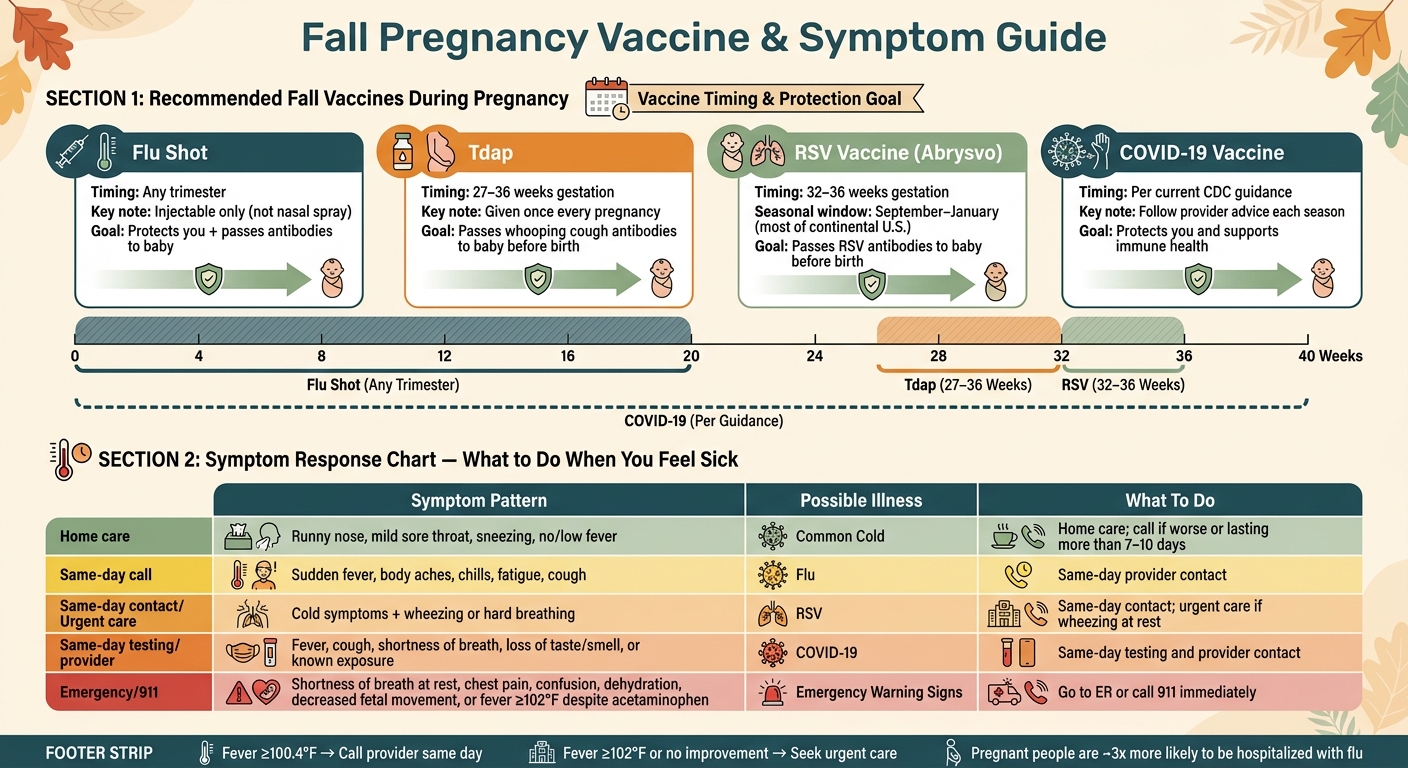
Fall is the right time to get pregnancy vaccines lined up before respiratory viruses start surging. The goal is simple: protect yourself now and help protect your baby after birth.
Flu, COVID-19, Tdap, and RSV vaccine timing during pregnancy
These vaccines do two jobs. They help protect you during pregnancy, and they can give your baby some early protection before delivery.
The flu shot can be given during any trimester. Get the injectable flu shot in any trimester, and try to get it as early as possible in the fall so the timing matches peak flu season. During pregnancy, you should get the injectable flu shot only, not the nasal spray, because the nasal spray contains a live attenuated virus.
Tdap is recommended once during every pregnancy, ideally between 27 and 36 weeks' gestation. That timing matters. The point is to pass protective antibodies to your baby before birth, since infants are too young to be fully vaccinated on their own.
The maternal RSV vaccine (Pfizer's Abrysvo) is given between 32 and 36 weeks' gestation during the seasonal window. In most of the continental U.S., that window runs from September through January. It’s important to get this vaccine within the recommended gestational range because your body needs time to make antibodies and pass them through the placenta before delivery.
You should also get the current-season COVID-19 vaccine during pregnancy, based on CDC guidance and your provider’s advice.
Your provider can help time any due vaccines based on gestational age.
After vaccines, daily habits can help keep your immune system steady through the fall.
Normal vaccine side effects and when to call your provider
Most side effects after these vaccines are mild and don’t last long. Arm soreness, fatigue, headache, mild fever, and temporary body aches are common and usually get better within a day or two. Rest, fluids, and provider-approved acetaminophen can help.
Call your provider the same day if you have high fever, severe or worsening symptoms, or signs of an allergic reaction: hives, swelling of the face or throat, or trouble breathing, or fainting.
Build daily habits that support your immune health
Vaccines do the heavy lifting. Your day-to-day habits help keep your immune system on track. What you eat, how much you drink, how well you sleep, and how often you move all shape how your immune system works through fall. These habits help protect you now and help support the antibodies your baby will depend on after birth.
Eat, drink, and sleep well to stay resilient
Food is one of the simplest ways to support immune health. In fall, it helps to build meals around seasonal, nutrient-rich options like citrus, leafy greens, sweet potatoes, eggs, beans, lentils, yogurt, and fortified plant milks.
Citrus fruits like oranges, grapefruit, and clementines give you vitamin C. That matters because vitamin C helps your body absorb iron from plant foods such as lentils, beans, and spinach. A simple way to make that work for you: pair iron-rich foods with a vitamin C source like strawberries, broccoli, or peppers.
Protein matters too. Lean protein sources like eggs, poultry, tofu, beans, and lentils help with antibody production and tissue repair. Yogurt, milk, and fortified plant milks add calcium and often vitamin D, which can help round out your routine.
Hydration still counts, even when cooler weather makes you feel less thirsty. Aim for 8 to 12 cups, or 64 to 96 ounces, of fluids each day. Water should do most of the work, but warm drinks count too. Soup, broth, and ginger or peppermint tea can make it easier to drink enough in the fall. Keeping a 16- to 20-ounce bottle nearby and refilling it through the day is a simple trick that helps.
Sleep also plays a big part in immune health. Good sleep supports normal immune function and antibody production. Aim for 7 to 9 hours a night when you can. A cool, dark, quiet room often helps. Cutting screen time for 30 to 60 minutes before bed may help you fall asleep faster. Blackout curtains, a white-noise machine, and a pregnancy pillow for side-lying support can make a big difference as your body changes in the third trimester.
Stay active safely as the weather cools
Regular movement helps circulation, lowers chronic inflammation over time, and can ease pregnancy-related fatigue. For most healthy pregnancies, ACOG recommends at least 150 minutes of moderate-intensity activity per week. That comes out to about 20 to 30 minutes on most days.
Brisk walking and prenatal yoga are two easy options for many people. Stationary cycling or water workouts can also be good picks if your provider says they’re okay.
Fall walks can still be a great choice. Dress in layers so you can adjust as your body temperature shifts during activity. Wear supportive, non-slip shoes, and pay attention to wet leaves, puddles, and early frost patches, since they can make sidewalks slick. Cooler weather doesn’t mean overheating can’t happen, so slow down or stop if you feel dizzy, lightheaded, or short of breath.
When the weather gets rough, try prenatal yoga at home or in a temperature-controlled space. And before you start a new routine, check with your provider, especially if you have pregnancy complications.
Daily habits work best when you also limit virus exposure at home, work, and gatherings.
Lower germ exposure at home, work, and fall gatherings
Fall usually means more time indoors. And when people spend more time inside together, respiratory viruses get more chances to spread.
They spread most easily in crowded indoor spaces. The good news is that a few simple habits can cut down exposure without turning daily life upside down. These steps work best when you pair them with vaccines and solid day-to-day habits.
Use ventilation, hand hygiene, and masks where they help most
Fresh air is one of the easiest tools you have.
Open windows on opposite sides of a room to create cross-ventilation. That helps push stale air out and bring cleaner air in. If the weather doesn't cooperate, run kitchen and bathroom exhaust fans during gatherings and for about an hour after people leave. That can help move stale air out. In shared rooms, a portable HEPA air cleaner adds another layer.
Hand hygiene still matters, too. Wash with soap for 20 seconds, or use hand sanitizer with at least 60% alcohol:
- after school pickup
- before eating
- after touching shared surfaces
Once those basics are in place, the next step is to cut down close contact when someone gets sick at home.
Wear an N95 or KF94 in crowded indoor spaces, clinics, airports, planes, and public transit during local surges. The fit matters a lot. A well-fitted respirator should cover your nose and mouth snugly, with no gaps.
Make a household plan for sick family members and newborn visits
If someone in your home is sick, keep that person in one room when you can. In shared spaces, have them wear a mask and use separate towels and cups. If you need to care for a sick child up close, wear a high-filtration mask during that contact and wash your hands right after.
During the illness, clean high-touch surfaces more often, especially:
- doorknobs
- faucet handles
- light switches
- remote controls
Kids can help more than we sometimes expect. Teaching them to wash their hands before leaving school and again as soon as they get home can cut down spread. During flu or RSV surges, it also makes sense to review school illness policies and skip nonessential in-person volunteering for a bit.
Newborn visits need extra care during RSV season, which typically runs from October through March across most of the U.S. In that window, visitor rules matter even more. Ask guests to stay home if they've had any symptoms in the past 48 to 72 hours. Have people wash their hands when they arrive, skip kiss greetings, and keep first visits short and small.
A simple group text before the baby comes home can make all of this feel normal instead of awkward. You can frame the rules as your pediatrician's recommendation, which often takes some pressure off.
Handwashing helps block contact spread. Masks cut down airborne spread. Ventilation dilutes shared air. Surface cleaning matters most when someone is already sick.
If symptoms start, know when to call your provider right away.
Know when to call your provider and plan ahead for your baby
Symptoms that need same-day, urgent, or emergency care
During pregnancy, call your obstetric provider the same day if you have a fever of 100.4°F or higher. If your fever reaches 102°F or doesn’t get better with acetaminophen and fluids, get urgent care.
Use this chart to sort out what needs home care and what needs help now:
| Symptom Pattern | Possible Illness | What to Do |
|---|---|---|
| Runny nose, mild sore throat, sneezing, no or low fever | Common cold | Home care; call if worse or lasting >7–10 days. |
| Sudden fever, body aches, chills, fatigue, cough | Flu | Same-day provider contact |
| Cold symptoms plus wheezing or hard breathing | RSV | Same-day contact; urgent care if wheezing or shortness of breath at rest |
| Fever, cough, shortness of breath, loss of taste or smell, or known exposure | COVID-19 | Same-day testing and provider contact |
| Shortness of breath at rest, chest pain, confusion, dehydration, decreased fetal movement, or fever ≥102°F despite acetaminophen | Emergency warning signs | Go to the ER or call 911 immediately |
Talk to your provider before taking any cold or flu medicine. A lot of these products include ingredients that aren’t recommended during pregnancy. Acetaminophen is usually the first choice for fever and pain, but take it only at the dose and for the length of time your provider recommends. The same rule applies to supplements: check first.
Prepare your home and your newborn health plan before delivery
The third trimester is a good time to get your ducks in a row. Go over your vaccine timing with your provider now so nothing gets missed before delivery. Also ask if RSV vaccination still makes sense based on your gestational age.
It also helps to set up a simple sick-day kit at home. Include:
- A thermometer
- Acetaminophen
- Saline spray
- A humidifier
- Oral rehydration fluids
- Hand sanitizer
While you’re at it, confirm your provider’s after-hours contact method. That way, you’re not hunting for it when you already feel sick.
Once you know when to call your provider, set visitor rules before the baby arrives. Anyone with a fever, cough, sore throat, or congestion should wait until they’ve been symptom-free for at least 48 to 72 hours. Visitors should wash their hands when they arrive, avoid kissing the baby’s face or hands, and keep early visits short. It’s often easiest to send those rules in one group text before the baby is born.
If you’re planning newborn stem cell banking, add it to your birth checklist now. If your family is banking cord blood, cord tissue, or placental tissue through Americord Registry, finish enrollment and collection planning now. Banking does not replace vaccines, hygiene, or prompt care.
Fall protection comes down to on-time vaccines, daily habits, lower exposure, fast symptom response, and a ready home plan.
FAQs
Can I get more than one vaccine at the same visit?
Yes. You may be able to get more than one vaccine at the same prenatal visit.
Talk with your healthcare provider about which shots you may need. They can help line up any recommended vaccines and confirm which ones are safe and needed during pregnancy to help protect both you and your baby throughout the fall.
What should I do if someone at home gets sick before I deliver?
If someone in your home gets sick before you deliver, try to keep some space between you and them to help protect both you and your baby. Wash your hands often, crack open the windows for a bit to let air in, and clean shared surfaces on a regular basis.
Don’t share towels, utensils, or bedding. If you can, have the sick person stay in a separate room and use a separate bathroom until they’re no longer contagious. If you start to feel sick or you’re worried about exposure, contact your healthcare provider.
How can I protect my newborn during RSV season?
To help protect your newborn from RSV and other respiratory illnesses during the fall, focus on clean air and good hygiene.
Keep indoor humidity between 30% and 50%, use a HEPA air purifier, and improve airflow in your home. Just opening a window for a bit can help when the weather allows.
Handwashing matters too. Wash your hands often, and ask visitors to do the same before touching your baby.
It also helps to limit your baby's exposure to crowds during peak illness season. The fewer close contacts, the lower the chance of bringing home germs. Along the same lines, keep pets out of the nursery to cut down on dander and dirt in your baby's sleep space.
Stay up to date on recommended vaccines, and if any symptoms worry you, contact your healthcare provider promptly.
The views, statements, and pricing expressed are deemed reliable as of the published date. Articles may not reflect current pricing, offerings, or recent innovations.


