

Mind, Body, and Baby: Managing Stress While Trying to Conceive
Stress can make trying to conceive even harder. It disrupts hormones, affects ovulation, and lowers sperm quality. But managing stress effectively can improve your chances of success. Here's what you need to know:
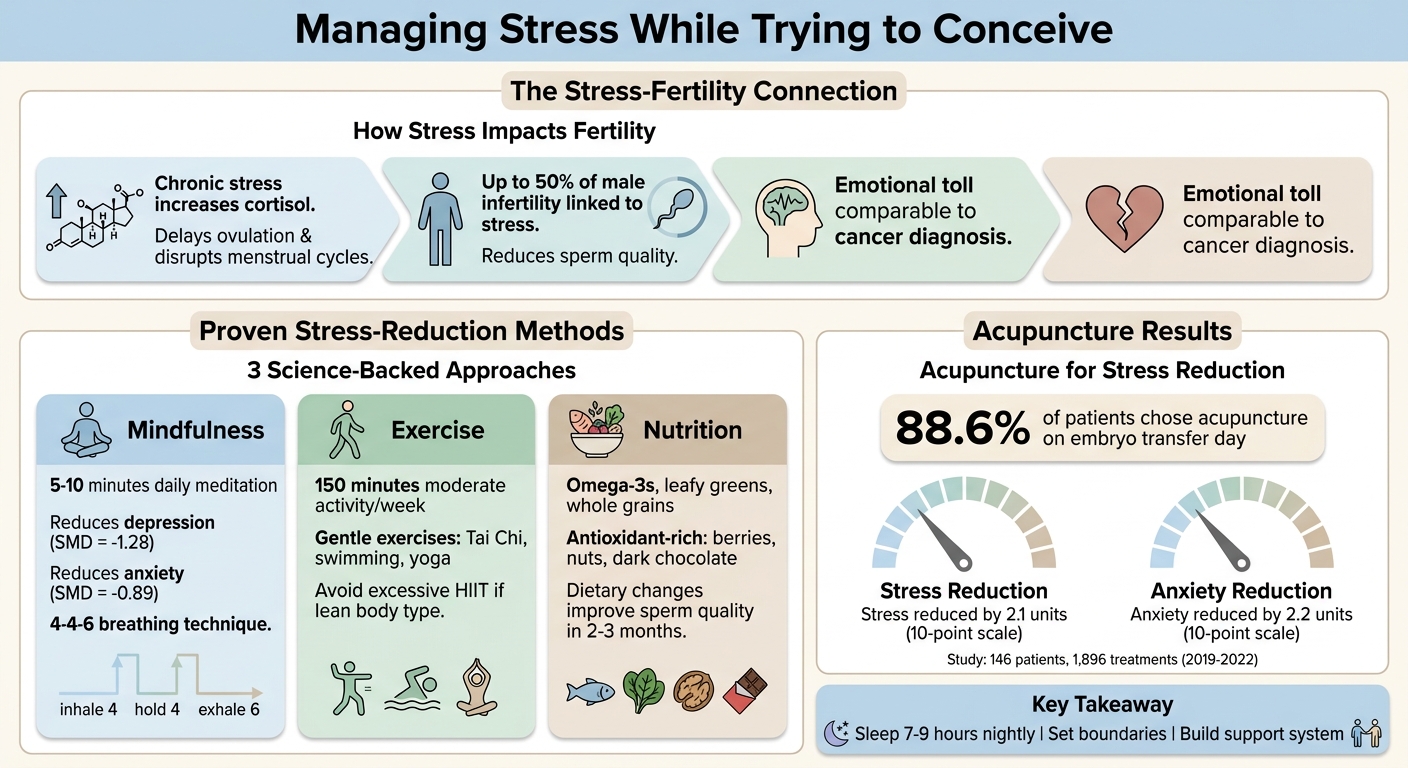
- Stress and Fertility: Chronic stress increases cortisol, which can delay ovulation, disrupt menstrual cycles, and reduce sperm quality. In fact, stress accounts for up to 50% of infertility in men.
- Emotional Toll: The mental strain of infertility is comparable to major illnesses like cancer. This cycle of stress can further impact your ability to conceive.
- Proven Strategies: Mindfulness, light exercise, and a nutrient-rich diet can help regulate stress hormones. Techniques like meditation, yoga, and acupuncture also show promising results.
- Practical Tips: Sleep 7–9 hours a night, avoid overexertion with intense workouts, and include antioxidant-rich foods like berries and salmon in your diet.
Key takeaway: You don’t need to eliminate stress entirely, but managing it can help restore hormonal balance and improve your fertility journey.
Proven Methods to Reduce Stress While Trying to Conceive
Practical strategies can help restore balance and reduce stress while supporting fertility. Small, consistent changes in your daily routine can make a difference. The key is finding what works best for you.
Use Mindfulness and Relaxation Techniques
Mindfulness practices like meditation can help lower cortisol levels, even with just 5–10 minutes a day. You don’t need to sit in complete silence for hours - try a guided meditation or a simple body scan exercise, especially during the two-week wait, to stay grounded.
Restorative yoga is another great option, combining gentle movement, breathwork, and meditation to activate your parasympathetic nervous system (the "rest and digest" mode). A quick "five senses" check-in - naming five things you see, four you can touch, three you hear, two you smell, and one you taste - can also ease anxiety before fertility tracking.
Getting 7–9 hours of quality sleep each night is essential for naturally lowering cortisol. Stick to consistent sleep and wake times, and allow yourself breaks from fertility tracking to reconnect with your partner and quiet your mind.
Exercise and Movement for Stress Management
Regular movement is a powerful stress reliever, but the type and intensity of exercise matter. Aim for 150 minutes of moderate activity each week, like brisk walking, cycling, or dancing. These activities elevate your heart rate enough to boost your mood and lower cortisol without overtaxing your body.
Gentle exercises such as Tai Chi, Qi Gong, or slow outdoor walks can help trigger your relaxation response, reducing muscle tension and heart rate. Swimming is another excellent choice, promoting circulation throughout your body, including to pelvic organs. The key is to choose activities that you enjoy and can maintain over time.
Be mindful of overdoing high-intensity workouts like HIIT or long-distance running, especially if you have a lean body type. Excessive vigorous exercise can sometimes suppress ovulation by adding stress to your system. Instead, use movement as a way to reclaim time for yourself - plan weekend hikes or evening walks that are completely unrelated to fertility tracking. Not only does this help break the cycle of obsessive symptom-spotting, but it also creates a more supportive hormonal environment for conception.
Follow a Stress-Reducing Diet
What you eat can play a big role in managing stress and supporting hormonal balance. Incorporate nutrient-dense foods like leafy greens (spinach, kale), whole grains (quinoa, brown rice), and omega-3-rich options (salmon, walnuts, flaxseeds) to reduce inflammation and promote hormone production.
Stress can lead to oxidative damage in the body, which may affect sperm DNA in men and egg quality in women. Antioxidant-rich foods - such as berries, dark chocolate, nuts, and colorful vegetables - can help counteract this. Since sperm production takes about 72–74 days, dietary changes can improve semen quality within 2–3 months.
Limit caffeine and alcohol, as they can heighten anxiety and interfere with sleep. Stay hydrated and eat balanced meals at regular intervals to maintain stable blood sugar levels. Skipping meals or relying on processed foods can lead to cortisol spikes, so focus on fueling both your body and your mind with wholesome choices.
Research-Backed Mind-Body Approaches
Studies reveal that combining mental and physical health strategies can ease stress and enhance reproductive health.
What Research Shows About Mindfulness and Fertility
Mindfulness-based practices have shown promising benefits for women undergoing fertility treatments. Research highlights their ability to reduce psychological challenges like depression and anxiety, which often arise during the demanding IVF process. For example, a meta-analysis found that mindfulness programs significantly decreased symptoms of depression (SMD = -1.28) and anxiety (SMD = -0.89) in individuals dealing with infertility.
Mindful Self-Compassion (MSC) therapy addresses the emotional hurdles of infertility, including feelings of guilt, shame, and hopelessness. This approach fosters "fertility self-efficacy", or confidence in managing the emotional and physical aspects of trying to conceive. Studies from Harvard-affiliated medical centers suggest that participants in stress-reduction programs incorporating meditation, cognitive behavioral therapy (CBT), and group support experienced higher pregnancy rates compared to those who did not participate.
Mindfulness techniques, such as deep breathing exercises, activate the parasympathetic nervous system, reducing cortisol levels and regulating GnRH release. Even simple practices like the 4-4-6 breathing method (inhale for 4 seconds, hold for 4 seconds, exhale for 6 seconds) can shift the body into a "rest and repair" state. Research also indicates that stress reduction in men can improve sperm quality, including concentration, motility, and lower DNA fragmentation.
Other mind-body approaches, like acupuncture, also offer scientifically supported benefits, particularly in stress reduction and reproductive health.
How Acupuncture May Help Reduce Stress
Acupuncture complements mindfulness research by using sterile needles at specific points on the body to balance energy flow and boost blood circulation to reproductive organs. While ongoing studies explore its direct impact on live birth rates, acupuncture is widely acknowledged as an effective tool for managing stress during fertility treatments.
A study conducted between 2019 and 2022 by University Hospitals Connor Whole Health and Case Western Reserve University examined 146 patients and 1,896 Traditional Chinese Medicine treatments. Led by Christine Kaiser, DACM, LAc, the research focused on 202 embryo transfers, revealing that 88.6% of patients opted for acupuncture on the day of their embryo transfer. Published in June 2025, the findings showed that just one acupuncture session reduced stress by 2.1 units and anxiety by 2.2 units on a 10-point scale.
"Our study demonstrates that acupuncture and whole-systems TCM can serve as a valuable tool to decrease pain, stress and anxiety - ultimately contributing to both improved outcomes and a more positive, holistic patient experience." - Christine Kaiser, DACM, LAc, Connor Endowed Director of Reproductive Well-being at UH Connor Whole Health
Starting acupuncture several months before trying to conceive can support multiple menstrual cycles. Weekly sessions are common, but plans should be tailored to your specific health history. Always consult your reproductive endocrinologist to ensure acupuncture aligns safely with your fertility treatment. The practice is considered highly safe and can complement most fertility therapies.
Both mindfulness and acupuncture showcase how integrating mind-body approaches can help manage stress and support fertility efforts.
Build a Calm and Supportive Environment
Your surroundings can have a big impact on how you manage stress while trying to conceive. While mindfulness and physical activities help you stay balanced internally, creating a supportive environment can make your fertility journey less overwhelming. The spaces you inhabit - both physically and emotionally - can either ease or intensify the stress you feel during this time.
Set Boundaries and Recognize Stress Triggers
Take a moment to identify what consistently raises your stress levels. Is it fertility tracking apps? Social media posts about pregnancy announcements? Invitations to baby showers? Recognizing these triggers isn’t just about protecting your emotions - it’s also about helping your body maintain hormonal balance.
Consider preparing a simple response for those inevitable, intrusive questions about your plans: "We’ll share news when we’re ready." This phrase can help you navigate family gatherings or social situations with less pressure. Don’t hesitate to skip events that feel emotionally draining, and feel free to mute or unfollow social media accounts that leave you feeling worse instead of better. If tracking apps start to feel more like a source of stress than a helpful tool, it’s okay to cut back or take breaks from using them.
Openly discuss timelines, feelings, and shared responsibilities with your partner. Stress doesn’t just affect one side of the equation - psychological stress has been linked to delays in conception and even accounts for up to 50% of male infertility cases. To ease this pressure, create rituals that have nothing to do with fertility, like regular pizza nights or weekend hikes. These shared activities can help you focus on your relationship outside the clinical aspects of trying to conceive. By managing external stressors together, you can strengthen your partnership and create a united approach to reducing stress.
Build a Support System
Setting boundaries is just one part of the equation - having a solid support system can make a world of difference. Infertility often feels isolating, but you don’t have to face it on your own. Consider seeking help from a therapist who specializes in reproductive mental health or infertility. They understand how anxiety about conceiving can create a vicious cycle of stress that disrupts reproductive hormones.
Support groups for those trying to conceive can also be a great outlet. They provide a space to share frustrations and experiences with others who truly understand, without placing all the emotional weight on your partner. Opening up in these settings can help lighten the emotional load and remind you that you’re not navigating this journey alone.
Conclusion: Take Control of Your Fertility Journey
Managing stress is a powerful way to support your fertility journey. It’s not about eliminating every worry, but rather creating balance within your body to help nurture a fertile environment. By addressing stress, you can help restore hormonal balance, which plays a crucial role in reproduction.
The link between mental and physical health is well-documented. Studies have shown that mind-body techniques can be highly effective in aiding conception. This isn’t about “thinking yourself pregnant” - it’s about breaking the cycle where stress negatively impacts your body’s reproductive functions.
"Taking care of your mental and emotional health is not a luxury; it's part of the process. It may even be one of the most impactful things you can do to support your fertility." - Center for Human Reproduction
This serves as a reminder that prioritizing stress management is a practical and meaningful step you can take right now.
Start Small for Lasting Results
You don’t need to overhaul your entire lifestyle to see improvements. Begin with small, manageable changes. For example, take a moment to pause and breathe deeply during your day - before opening your fertility app or as part of your bedtime routine. Even five minutes of guided meditation or ensuring you get 7–9 hours of quality sleep can make a noticeable difference by reducing cortisol levels and supporting hormonal health.
Pick one or two strategies that resonate with you. Maybe it’s a quiet nature walk on Sunday, cutting back on obsessive ovulation tracking, or preparing a gentle way to respond to unsolicited questions. These aren’t just ways to ease anxiety - they’re ways to give your body the care and stability it needs on this path. The aim isn’t to achieve perfect calm, but to find a state of calmness that feels right for you.
FAQs
When should we see a fertility specialist if stress is a factor?
If stress continues to interfere with your well-being despite trying various stress management methods - or if it’s contributing to hormonal imbalances or fertility challenges - it may be time to consult a fertility specialist. Long-term stress can throw off reproductive hormones and disrupt ovulation, so seeking professional advice can be a crucial step in addressing these issues effectively.
What stress signs might be affecting my cycle or sperm health?
Stress can trigger hormonal shifts that may disrupt ovulation, shorten the luteal phase, or negatively affect sperm quality. Signs of stress often include heightened anxiety, difficulty sleeping, and emotional tension, which can throw off hormonal balance and impair reproductive health. Finding ways to manage stress is essential for maintaining both fertility and overall wellness during this period.
Which supplements are safe for fertility-related stress?
Supplements such as CoQ10 and DHEA are often regarded as safe and might play a role in supporting fertility. That said, it’s crucial to talk with a healthcare provider before adding any supplement to your routine. This ensures it aligns with your individual health needs and circumstances.
The views, statements, and pricing expressed are deemed reliable as of the published date. Articles may not reflect current pricing, offerings, or recent innovations.


