

Planning for Pregnancy? Why Men Need a 90-Day Cannabis Detox
When preparing for pregnancy, men often overlook how lifestyle choices impact fertility. Regular cannabis use can significantly reduce sperm quality, affecting count, movement, shape, and even DNA integrity. Research shows that frequent cannabis use lowers sperm concentration by 28% and increases DNA damage, which may lead to higher risks of pregnancy loss and developmental issues in children.
The good news? These effects are reversible. Since sperm production takes roughly 74 days, quitting cannabis for a 90-day period allows the body to produce healthier sperm free of THC interference. This detox period improves the chances of conception and supports healthier outcomes for future offspring.
Key takeaways:
- Cannabis negatively affects sperm count, motility, morphology, and DNA.
- THC disrupts sperm energy, hormonal balance, and reproductive gene expression.
- A 90-day detox aligns with the sperm production cycle for recovery.
- Lifestyle adjustments like a healthy diet, exercise, and avoiding heat exposure can aid fertility.
How Cannabis Affects Male Fertility and Sperm Quality
Cannabis doesn’t just alter your mental state - it can also interfere with your reproductive system, making conception more challenging. The key player here is THC, the psychoactive compound in cannabis, which disrupts cellular functions and throws off hormonal balance.
How THC Affects Sperm Quality
THC mimics natural cannabinoids by binding to CB1 and CB2 receptors found on sperm cells and in the testes. This disrupts the endocannabinoid system, which is essential for healthy reproduction. Research shows that cannabis smokers have only 2.26% normal sperm morphology, compared to 7.46% in non-smokers.
But the damage doesn’t stop at sperm shape. THC targets the mitochondria - those tiny energy factories inside sperm cells - disrupting ATP production. Without adequate energy, sperm lose motility. Worse, THC triggers premature capacitation, a process where sperm undergo changes too early, depleting their energy reserves before reaching the egg. Studies reveal that 68.66% of sperm in cannabis smokers are immotile, compared to 51.73% in non-smokers.
"Phytocannabinoid exposure to sperm may adversely affect sperm function by stimulating premature capacitation... leading to exhaustion of sperm ATP, inability to reach the ovum, and premature death." - BMC Molecular and Cell Biology
THC also damages sperm DNA. Cannabis users show 28.53% DNA fragmentation, while non-smokers have just 10.1%. Beyond fragmentation, THC alters over 200 gene transcripts in mature sperm, many of which are crucial for embryo development. These changes may not only complicate conception but could also affect the health of future offspring. Alarmingly, THC accumulates in reproductive tissues like the epididymis at levels up to 80 times higher than in blood plasma, creating a harmful environment for sperm development.
How Cannabis Changes Hormone Levels
THC’s effects extend beyond sperm cells to the very hormones that control reproduction. By binding to CB1 and CB2 receptors in the hypothalamus and pituitary gland, THC disrupts the Hypothalamic-Pituitary-Gonadal (HPG) axis. This interference reduces key hormones like GnRH, LH, and FSH, leading to lower testosterone levels and impaired sperm production. Regular cannabis use - more than once a week - has been linked to a nearly 30% drop in median sperm concentration and total sperm count. Prolonged use at high doses can even cause testicular shrinkage.
"Chronic marijuana use can potentially lead to fertility problems in male population, such as decreased sperm motility, DNA integrity or compromised capacitation, leading to troubles with egg fertilization and conception." - Karolina Kusibab et al.
This hormonal disruption hits both central (brain and pituitary) and peripheral (testicular) systems, compounding its negative effects on sperm production. Among men undergoing infertility evaluations, 43% reported marijuana use, with current users showing far higher rates of abnormal sperm morphology - 50.7% compared to 33.1% in those who never used cannabis. Given these impacts, a thorough 90-day detox may be necessary to restore fertility.
The 90-Day Sperm Production Cycle Explained
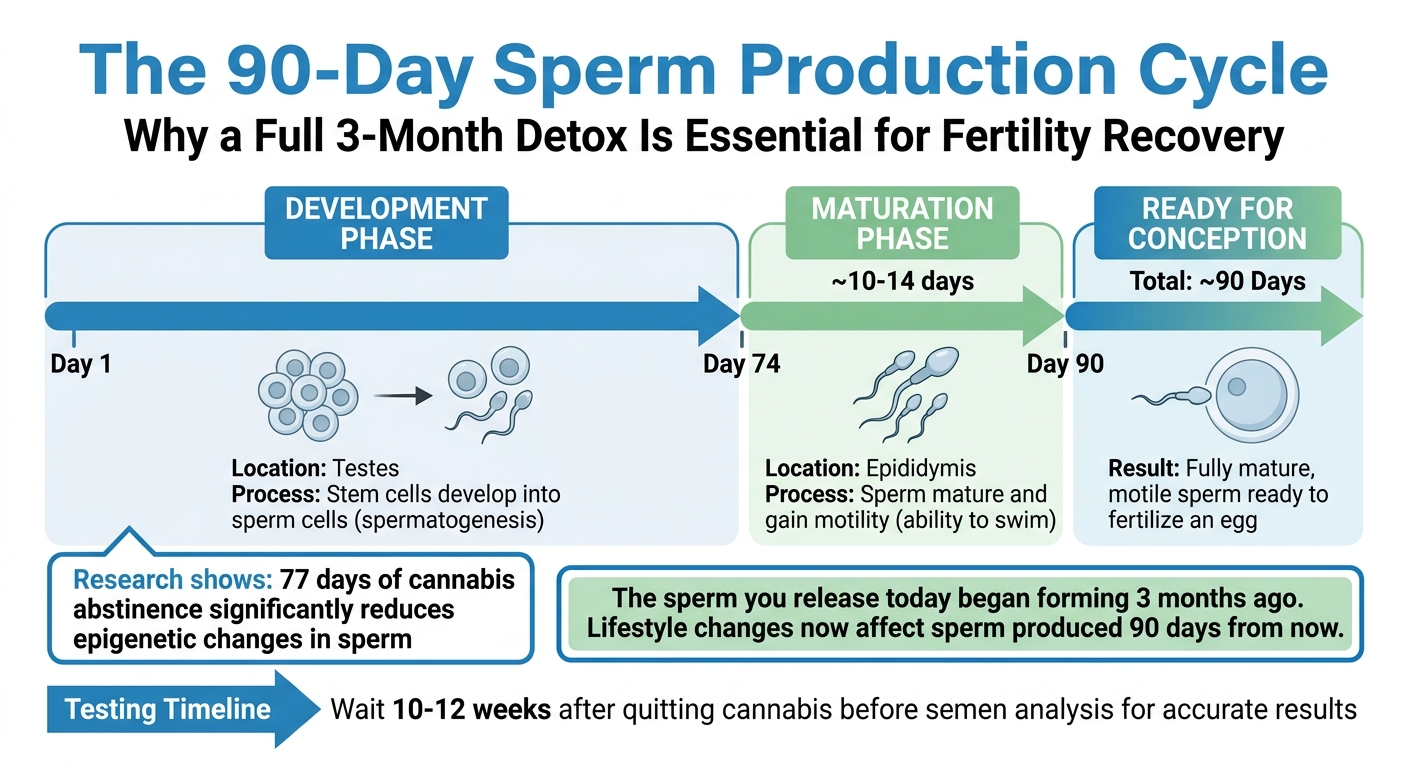
To understand why a 90-day detox is crucial, it helps to first grasp how sperm are produced. This process is anything but quick - it takes nearly three months for sperm to fully develop and mature.
The Sperm Production Timeline
The creation of sperm, known as spermatogenesis, spans about 74 days. During this phase, stem cells in the testes transform into sperm cells. But the process doesn’t end there. Once formed, sperm require an additional 10 to 14 days to travel through the epididymis, where they mature and gain the ability to swim and fertilize an egg.
This means the sperm you release today began forming nearly three months ago. Any lifestyle changes you make now - like quitting cannabis - won’t affect your current sperm. Instead, they’ll influence the batch that will be ready for fertilization in about 90 days.
| Phase | Duration | What Happens |
|---|---|---|
| Development | ~74 Days | Stem cells develop into sperm cells in the testes |
| Maturation | ~10-14 Days | Sperm mature and gain motility in the epididymis |
| Total Cycle | ~90 Days | From initial development to readiness for fertilization |
"Think of sperm like a garden, not a light switch. You don't 'fix' it today - you improve the growing conditions, and you judge results after a full growth cycle." - SWMR Fertility
This timeline highlights why a full 90-day THC-free period is critical for fertility recovery.
Why Timing Matters for Fertility Recovery
The 90-day sperm production cycle explains why even brief exposure to THC can disrupt fertility. A continuous 90-day detox ensures that every stage of sperm development occurs without interference from cannabis.
Research from Duke University supports this approach. Their findings revealed that a 77-day abstinence period significantly reduced most of the epigenetic changes - chemical alterations in DNA - caused by cannabis use. These changes are linked to neurodevelopmental disorders, making the "washout" period essential.
Sperm exposed to THC during development may carry risks like damaged DNA, poor motility, abnormal shape, and altered gene expression. According to Susan Murphy, Ph.D., a minimum of 74 days without cannabis is necessary to ensure sperm quality before conception.
If you’re monitoring progress through semen analysis, wait 10 to 12 weeks after quitting cannabis before testing. Testing too soon will reflect sperm that began forming while THC was still in your system, giving an incomplete picture of your recovery.
What Affects Recovery Speed After Quitting Cannabis
Recovery timelines can vary widely from person to person. While the universal 90-day sperm production cycle provides a general framework, individual factors play a big role in determining how quickly fertility improves after quitting cannabis. Understanding these elements can help you set realistic expectations for your journey.
How Usage Frequency and Duration Affect Recovery
How often and how long you've used cannabis has a direct impact on recovery time. For occasional users, the effects on sperm health may be minor, leading to a quicker rebound. However, daily users often experience more severe declines in sperm count, motility, and morphology.
For those with a history of chronic or long-term use - especially daily use over several years - recovery might take longer than a single 90-day cycle. Hormonal balance and testicular function may require more time to return to normal. Susan Murphy, Ph.D., from Duke University School of Medicine, advises that heavy users may need to abstain for six months or more to fully clear THC's effects.
"Stopping cannabis use for as long as possible - at least for a 74-day period before trying to conceive - would be a good idea. If someone is really serious about that, I would say to stop cannabis use for as long as possible prior to conception – meaning multiple spermatogenic cycles." - Susan Murphy, Ph.D., Associate Professor in the Department of Obstetrics & Gynecology, Duke University School of Medicine
How Different Consumption Methods Impact Recovery
The way you consume cannabis also matters. High-potency products like concentrates and high-THC vapes tend to have a stronger negative effect on sperm health. Since THC is fat-soluble, it lingers in the body longer, especially with frequent use of potent products.
"Daily use with concentrates or high-THC vapes? That's where the research consistently shows real changes in count, motility, and morphology." - RethinkTHC
For men who regularly use these high-potency products, committing to the full 90-day detox period is especially critical. While research is still evolving on how specific consumption methods affect recovery, the general rule is clear: the stronger the product, the greater the impact on fertility.
How Age, Health, and Lifestyle Affect Recovery
Individual health and lifestyle factors also influence recovery speed. Age is a key consideration - younger men without underlying health issues often recover faster than older men or those with pre-existing fertility problems.
Lifestyle choices can either speed up or slow down the process. Using alcohol, nicotine, or opioids alongside cannabis can amplify the negative effects on sperm and delay recovery. Environmental factors, like exposure to heat from hot tubs, saunas, or laptops placed directly on the lap, can also hinder sperm production even after quitting cannabis.
Diet, exercise, and weight management play important roles too. Maintaining a healthy weight, eating a nutrient-rich diet, taking a daily multivitamin, and staying physically active can all help your reproductive system bounce back more quickly.
Lifestyle Changes to Improve Fertility During Detox
Quitting cannabis is just the beginning. What you do during the 90-day detox plays a huge role in helping your body improve sperm quality. Small, intentional lifestyle changes can make a big difference in speeding up fertility recovery.
Foods and Nutrients That Support Sperm Health
Your diet has a direct impact on sperm quality during the detox process. A Mediterranean-style diet - rich in whole foods, fiber, and antioxidants - can promote healthy sperm production. Foods like walnuts, pumpkin seeds, spinach, and seafood are particularly helpful in protecting sperm from oxidative damage.
Incorporate nutrients like zinc, vitamin E, CoQ10, and L-Carnitine into your diet to shield sperm from cellular stress. For instance, one male prenatal supplement has been clinically shown to improve sperm motility by 52% in an IRB-approved study.
Pairing these dietary improvements with regular exercise and stress management can further enhance fertility during detox.
Exercise and Stress Reduction
Exercise plays a vital role in maintaining testosterone levels and hormonal balance, both of which are essential for sperm health. Aim for 150 minutes of moderate cardio weekly, along with two strength training sessions. This level of activity helps create an optimal internal environment without overdoing it, which could lead to fatigue, reduced libido, or disrupted recovery.
Stress management is just as important. Detoxing from cannabis can cause anxiety and discomfort, while chronic stress may lead to secondary fertility issues, such as poor sleep, unhealthy eating, or increased alcohol use. Simple practices like five minutes of paced breathing or a short, distraction-free walk can help. Even a 10-minute walk after your largest meal can improve glucose control and support reproductive health.
Beyond diet and exercise, avoiding certain habits and risks is key to ensuring the best results.
Avoiding Other Fertility Risk Factors
Cutting out nicotine and limiting alcohol is essential, as both can harm sperm count, motility, and DNA integrity. Keep caffeine intake under 100 mg per day - switching to green tea (around 40 mg of caffeine) or decaf options can help, since high caffeine levels may lower sperm concentration.
Getting 7–9 hours of sleep each night is crucial for reducing DNA fragmentation and supporting reproductive hormone levels. Opt for loose-fitting, breathable boxers, and avoid placing laptops or phones near your groin. This helps minimize heat and radiation exposure, which could negatively affect sperm production.
How to Track Fertility Improvements
Monitoring your progress during a 90-day cannabis detox is essential to confirm that it's positively affecting your fertility. A semen analysis is widely regarded as the most reliable way to measure this. This test evaluates three key factors: sperm concentration, motility, and morphology. Scheduling this test 10–12 weeks after your last cannabis use ensures the sample reflects sperm produced without THC interference, giving you a clear picture of your progress.
Starting with a baseline test at the beginning of your detox is crucial. This initial test provides a benchmark to measure improvements. To ensure consistency, follow the same 2–4 day abstinence period before each test. This approach makes it easier to compare results and track changes effectively. If your baseline results indicate potential issues, they can guide you toward further, more detailed testing.
For those with a history of heavy cannabis use or ongoing fertility challenges, advanced tests might be necessary. These include DNA fragmentation tests to evaluate sperm integrity and hormone panels to check levels of testosterone, LH, and FSH. Studies suggest that after 77 days of abstinence, most cannabis-related epigenetic changes in sperm revert to normal.
"Stopping cannabis use for as long as possible – at least for a 74-day period before trying to conceive – would be a good idea." - Susan Murphy, Ph.D., Associate Professor in the Department of Obstetrics & Gynecology, Duke University School of Medicine
Be open with your healthcare provider about your cannabis use, including frequency and method of consumption. This information helps them interpret your test results more accurately. Additionally, if you experienced a high fever or serious illness during your detox, wait an extra 8–12 weeks before retesting to ensure accurate results.
Conclusion
Cannabis use has been shown to lower sperm count, motility, and morphology while also causing harmful changes to sperm DNA. Regular cannabis consumption significantly impacts sperm concentration, and with male factor infertility contributing to about 30% of infertility cases, these effects are worth serious consideration.
A 90-day detox aligns with the sperm production cycle, which takes approximately 74 days, giving the body time to produce THC-free sperm. Research from Duke University highlights that most cannabis-related changes to sperm DNA begin to reverse after 77 days of abstinence, showing the body’s ability to recover when given enough time.
Every step you take - from detoxing to adopting healthier habits - can improve sperm health and increase your chances of conception. Supporting your detox with habits like maintaining a healthy weight, staying active, avoiding excessive heat to the scrotum, and taking a daily multivitamin can further enhance results. For measurable progress, consider starting with a semen analysis and retesting after 10–12 weeks to track improvements in sperm quality.
Committing to a 90-day detox can make a meaningful difference in your fertility journey. This short-term effort can lead to long-term rewards, offering your future child the healthiest possible start. Science backs the benefits, and healthcare professionals nationwide recommend this approach as an essential step in planning for a family.
FAQs
Does CBD affect sperm too?
Cannabidiol (CBD) can impact sperm and male fertility. Studies suggest that cannabinoids, including CBD, interact with the endocannabinoid system, which is involved in reproductive processes. Research has associated cannabis use with lower sperm quality and reduced fertility. To support reproductive health, it may be beneficial to limit or avoid cannabis products, including CBD.
Can secondhand cannabis smoke impact fertility?
Secondhand cannabis smoke can impact fertility by lowering sperm quality and affecting overall reproductive health. Research links even indirect cannabis exposure to adverse effects on male fertility. Reducing exposure to secondhand smoke is a crucial step for those preparing for pregnancy.
What can I do if we want to conceive sooner than 90 days?
If your goal is to conceive within 90 days, it's best to steer clear of cannabis and other psychoactive substances. Studies suggest that sperm quality generally begins to improve around 74 days after quitting cannabis. To help with this recovery process, it's important to avoid cannabis entirely during this timeframe. For tailored guidance, consider reaching out to a fertility specialist who can provide advice specific to your needs.
The views, statements, and pricing expressed are deemed reliable as of the published date. Articles may not reflect current pricing, offerings, or recent innovations.


