

Navigating Early Pregnancy Anxiety: Facts to Give You Peace of Mind
Feeling anxious during early pregnancy is common and completely normal. Over 22% of women experience significant anxiety in the first trimester due to hormonal changes, physical symptoms, and emotional worries like the fear of miscarriage. The good news? Most of these fears are manageable, and many physical symptoms - like mild cramping or spotting - are normal signs of a healthy pregnancy.
Here’s what you need to know:
- Stress and miscarriage: Moderate stress doesn’t cause miscarriage; most early losses are due to chromosomal issues.
- Spotting and cramping: Light spotting occurs in up to 40% of pregnancies and is often harmless. Mild cramping is typically due to your uterus stretching.
- Anxiety’s impact on the baby: Anxiety alone doesn’t increase the risk of birth defects or complications.
Practical steps to ease anxiety include deep breathing, grounding techniques, gentle exercise, and building a support system. If anxiety disrupts daily life, professional help like therapy or medication can provide relief. Remember, seeking help is a sign of strength, not weakness.
Evidence-Based Facts to Address Common Fears
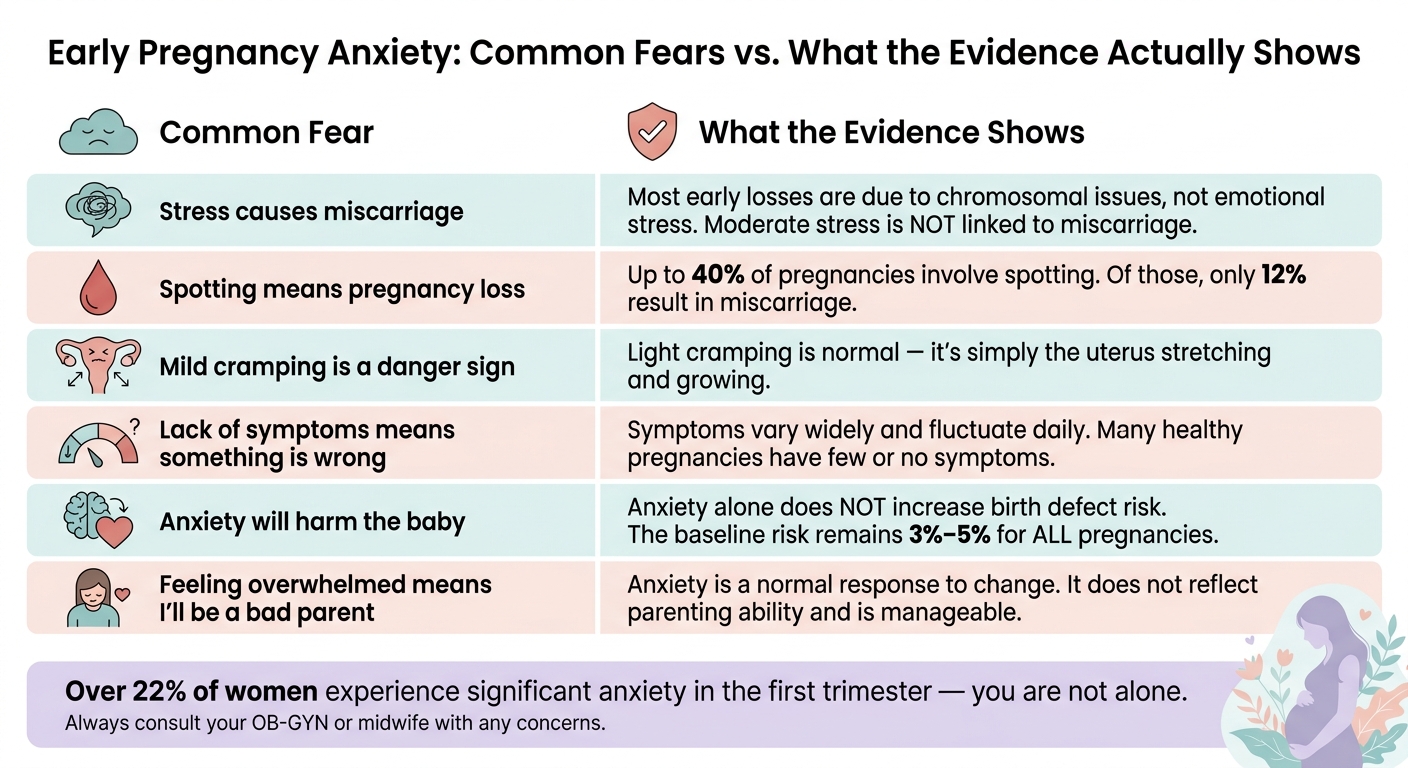
What Common Symptoms Actually Mean
A lot of the physical changes during early pregnancy that might feel unsettling are actually signs your body is doing what it’s supposed to. For example, mild cramping is often just your uterus expanding, which is completely normal. Similarly, light spotting - something up to **40% of women experience early on - **can be caused by implantation bleeding or the increased blood flow to a more sensitive cervix. Nausea and fatigue, while tough to deal with, are linked to rising levels of hCG and progesterone. These hormones are essential for building the placenta and supporting the fetus.
"Bleeding or spotting in early pregnancy is very common, and a lot of people will experience it." - Jennifer Kaiser, MD, OB/GYN, University of Utah Health
It’s important to differentiate between spotting (a few drops that don’t fill a liner) and heavier bleeding (which requires a pad). If you notice heavier bleeding or have any concerns, reach out to your healthcare provider. As Dr. Kaiser explains: "I really want to reassure people that if you're worried about any bleeding or spotting, you should have it evaluated - that's what we're here for."
Recognizing these signs as normal can help ease some of the anxiety that naturally comes with early pregnancy.
Why Pregnancy Anxiety Is Normal and Manageable
Feeling anxious during early pregnancy doesn’t mean you’re failing - it’s actually a natural response to a huge life change. Hormonal surges, particularly in progesterone and estrogen, can make your brain’s stress-regulation systems more sensitive, which might explain why worry feels heightened. The good news? Moderate stress has not been shown to cause miscarriage or birth defects. In fact, anxiety alone doesn’t raise the baseline 3%–5% risk of birth defects present in all pregnancies. Feeling overwhelmed is simply part of adjusting to this new chapter - it’s not a reflection of your ability to be a good parent. Knowing this, backed by evidence, can make a big difference in managing pregnancy-related anxiety.
Quick Facts: Common Fears and What the Evidence Says
Here’s a quick overview of common fears and the facts that can help ease them:
| Common Fear | What the Evidence Actually Shows |
|---|---|
| Stress causes miscarriage | Emotional shocks or minor physical incidents aren’t linked to miscarriage. Most early losses happen due to chromosomal issues, not stress. |
| Spotting means pregnancy loss | About 40% of pregnancies involve spotting. Of those who experience early bleeding, only 12% result in miscarriage. |
| Mild cramping is a danger sign | Light cramping is a normal part of the uterus stretching and growing. |
| Lack of symptoms means something is wrong | Symptoms can vary widely and even fluctuate daily. Many healthy pregnancies have few or no symptoms. |
| Anxiety will harm the baby | Anxiety alone doesn’t increase the risk of birth defects. The baseline risk remains 3%–5% for all pregnancies. |
| Feeling overwhelmed means I’ll be a bad parent | Feeling anxious is a normal response to change and doesn’t reflect your parenting abilities. Anxiety is manageable. |
Practical Ways to Manage Anxiety During Early Pregnancy
Relaxation Techniques That Help
Simple techniques can make a big difference in managing day-to-day anxiety. One effective method is diaphragmatic breathing: inhale deeply for 4 counts, allowing your belly to rise, then exhale slowly for 6 counts. This kind of breathing activates your body’s natural calming response.
Another helpful approach is the 5-4-3-2-1 grounding technique, which shifts your focus to the present moment. Identify 5 things you can see, 4 you can feel, 3 you can hear, 2 you can smell, and 1 you can taste. Studies show that relaxation techniques like these can reduce maternal anxiety by an average of 5.04 points.
"Mindfulness is a specific meditation technique that can help during treatment for prenatal mood disorders, emotional distress, and psychological strains." - MDPI Healthcare Journal
Progressive Muscle Relaxation (PMR) is another effective method. It involves tensing and then relaxing different muscle groups systematically. Programs lasting 6 to 8 weeks have shown measurable improvements in cortisol levels for pregnant women, with benefits extending into the postpartum period. Pairing these techniques with gentle physical activity can further enhance their calming effects.
Gentle Movement and Exercise
Staying active during pregnancy can significantly lower anxiety levels. Research reveals that exercise-only interventions reduce the odds of prenatal depression by 67%. A meta-analysis of over 2,000 women confirmed that moderate-intensity exercise 3 to 4 days a week is safe for uncomplicated pregnancies, with no increased risk of preterm birth or low birth weight.
Aim for 150 minutes of moderate-intensity activity each week. Options like brisk walking, swimming, or prenatal yoga are ideal, as they allow you to stay active while still being able to hold a conversation. If you’re just starting out, begin with 5 to 10 minutes daily and gradually increase over time. Stop immediately if you feel dizzy, experience chest pain, vaginal bleeding, or have painful contractions.
"Supervised PA [physical activity] during pregnancy could prevent and reduce prenatal anxiety and anxiety symptoms." - Sánchez-Polán M, et al.
Building a Support System
Sharing your concerns with trusted individuals can ease feelings of anxiety. Whether it’s a partner, friend, or family member, opening up about your worries can be incredibly comforting. If your personal circle feels limited, consider joining prenatal support groups. Many hospitals and OB practices offer in-person options, and online communities like What to Expect and The Bump connect you with others who understand what you’re going through.
Your OB or midwife is also a vital part of your support network. Bring up any emotional challenges during your appointments - they can guide you to a perinatal mental health specialist if needed. Alongside emotional support, managing your environment can also help keep anxiety at bay.
How to Reduce Anxiety Triggers
A common anxiety trigger during early pregnancy is excessive online symptom searching. Googling symptoms often leads to worst-case scenarios, making it easy to mistake a rare risk for a certainty. Instead, jot down your concerns and discuss them with your healthcare provider at your next visit.
It’s also a good idea to curate your digital space. Mute or unfollow social media accounts and forums that amplify fear or encourage unhealthy comparisons. Replace the urge to check symptoms with grounding rituals, like placing your hands on your belly and taking three slow breaths. Avoid using home fetal Dopplers during the first trimester, as difficulty finding a heartbeat can cause unnecessary stress.
"The goal is not to stay dry, but to learn how to swim, how to float, how to catch your breath when you surface." - Dr. Sajeela Shahid, Gynecologist
Another strategy is the "Worry Window": set aside a specific 10-minute block each day to address anxious thoughts. If worries arise outside this time, remind yourself that you’ll revisit them later. This approach helps keep anxiety contained, making it easier to focus on the present. Incorporating these practices into your routine can help you navigate this transformative stage with greater ease.
When to Get Professional Help
While self-care can often help manage anxiety, knowing when to seek professional support is crucial.
Signs That Anxiety May Need Clinical Attention
If worry starts disrupting your daily life - whether it’s eating, sleeping, working, or maintaining relationships - it could be a sign of an anxiety disorder.
"Worry becomes an anxiety disorder when the thoughts are frequent, time-consuming, intrusive and irrational." - MotherToBaby
Physical symptoms like a racing heart, trembling, shortness of breath, or digestive issues might indicate clinical anxiety rather than typical pregnancy-related discomfort. Panic attacks - intense episodes of fear where you feel out of control or fear dying - are another red flag. Sleep issues are also a concern; if you’re scoring 8 or higher on the PSQI (Pittsburgh Sleep Quality Index), it’s time to consult a professional. Don’t overlook the insights of those around you - if someone close expresses concern about your anxiety, take their perspective seriously.
Treatment Options Available to You
When self-care isn’t enough, there are effective, research-backed treatments that can help. Clinical pregnancy anxiety is manageable with the right approach. One of the most trusted methods is Cognitive Behavioral Therapy (CBT), which has been shown to reduce perinatal anxiety both in the short and long term. Other therapies, such as exposure therapy and EMDR (Eye Movement Desensitization and Reprocessing), are also safe and effective during pregnancy.
"Psychotherapy, including exposure therapy, is effective and is overall beneficial for pregnant women... with no known adverse effects on pregnancy outcomes." - Archives of Gynecology and Obstetrics
If therapy alone doesn’t provide enough relief, medication might be an option. SSRIs like sertraline are often recommended during pregnancy due to their well-documented safety. However, never adjust your medication on your own - it can worsen symptoms. Always consult your healthcare provider before making changes. If starting medication for the first time, ask your doctor to screen for bipolar disorder first, as antidepressants alone can exacerbate bipolar symptoms.
Collaborative care - where your OB, midwife, and mental health professional team up - has been found to be more effective than working with a single provider. The table below highlights the difference between normal pregnancy worries and symptoms that may require professional attention.
Table: Normal Worry vs. Symptoms That Need Attention
| Feature | Normal Pregnancy Worry | Symptoms Needing Professional Attention |
|---|---|---|
| Frequency | Occasional concerns about the baby’s health | Frequent, time-consuming, or constant intrusive thoughts |
| Daily Impact | Does not prevent daily tasks or self-care | Interferes with everyday activities and functioning |
| Physical Signs | Mild, temporary tension | Heart pounding, trembling, shortness of breath, or panic attacks |
| Sleep | Occasional difficulty getting comfortable | Persistent sleep problems (PSQI score ≥ 8) |
| Thought Content | Realistic concerns about upcoming changes | Irrational worry about highly unlikely events |
| Control | Worries can be managed or set aside | Worry feels excessive and uncontrollable |
If you’re unsure where you fall, it’s better to err on the side of reaching out. Around 15.2% of pregnant women meet the criteria for a clinically diagnosed anxiety disorder, and early intervention can make a significant difference - for both you and your baby.
Conclusion: Steps You Can Take to Feel More at Ease
Feeling anxious during early pregnancy is a natural response to the big changes happening in your life. In fact, over 22% of women experience anxiety in the first trimester alone, showing just how common and valid these feelings are.
The good news? Moderate stress doesn’t cause miscarriage or birth defects. What truly matters is how you respond to those anxious moments. Small, consistent actions can make a noticeable difference. Techniques like diaphragmatic breathing, the 5-4-3-2-1 grounding method, setting aside a 10-minute "worry window", and maintaining healthy habits like staying hydrated, taking prenatal vitamins, and engaging in gentle exercise can all help. These strategies become even more effective when combined with a reliable support system.
Be intentional about leaning on your support network. Using statements like "I need" can help your partner understand whether you’re looking for comfort or solutions. If anxiety starts interfering with your sleep, eating habits, or daily life, don’t hesitate to reach out to a perinatal therapist or your OB-GYN. Seeking help is a sign of strength, not weakness.
While accepting uncertainty is tough, it’s also part of life. Shifting your mindset from "what if everything goes wrong" to "I feel scared, but I’m showing up for my pregnancy" can be empowering. These practical strategies are here to guide you through this time, reminding you that support is always within reach.
FAQs
When should I call my OB about bleeding or cramps?
If you experience any vaginal bleeding or spotting during early pregnancy, it’s important to contact your healthcare provider - even if the bleeding stops. Mild cramping may be normal, but if the bleeding is accompanied by pain, reach out to your doctor immediately.
Get emergency care if you notice heavy bleeding (such as soaking through two pads in an hour), severe abdominal or one-sided pain, dizziness, lightheadedness, fever, or if you pass any tissue. These symptoms could indicate a more serious issue.
How can I tell normal worry from an anxiety disorder?
Normal pregnancy-related worry tends to be temporary, tied to specific situations, and doesn’t interfere with daily life. On the other hand, an anxiety disorder is marked by ongoing, uncontrollable worry accompanied by symptoms such as intrusive thoughts, a racing heart, chest tightness, or trouble sleeping. If your concerns feel unrelenting, disrupt your eating, sleeping, or overall ability to function, or if reassurance only offers short-term relief, it’s crucial to talk to a healthcare provider about what you’re experiencing.
What anxiety treatments are safest during pregnancy?
For managing mild to moderate pregnancy anxiety, psychotherapy is often suggested as a first step. Non-medication approaches that can help include mindfulness therapy, cognitive behavioral therapy (CBT), relaxation techniques, counseling, and even regular exercise. In some cases, medication such as SSRIs might be an option, but this requires a thorough discussion with your healthcare provider. Always consult with your provider to develop a treatment plan that prioritizes both your well-being and your baby's safety.
The views, statements, and pricing expressed are deemed reliable as of the published date. Articles may not reflect current pricing, offerings, or recent innovations.


