

Emergency Preparedness: Why Bank Stem Cells
Banking stem cells at birth is a proactive way to prepare for unexpected medical challenges. Stem cells, collected from umbilical cord blood and tissue, can treat over 80 conditions like leukemia, sickle cell anemia, and immune disorders. They also show promise in emerging therapies for autism and cerebral palsy. The process ensures a 100% genetic match for your child and often matches for siblings, offering faster treatment options compared to public donor registries. Americord Registry provides services like CryoMaxx™ processing to preserve stem cells for decades, flexible family plans, and a $110,000 engraftment guarantee, making it easier for families to secure this medical resource.
Key Takeaways:
- What Are Stem Cells? They are unique cells that can regenerate blood, immune systems, and tissues, making them critical for treating serious diseases.
- Why Bank Them? Birth is the only opportunity to collect these cells, which can provide life-saving treatments for over 80 FDA-approved conditions.
- How It Works: Cells are collected during childbirth, processed, and stored cryogenically for future use.
- Americord Features: Advanced processing, 5-compartment storage for multiple treatments, and flexible payment plans.
By banking stem cells, you can ensure your family has immediate access to advanced medical treatments when it matters most.
The Problem: Medical Emergencies Strike Without Warning
Medical emergencies - like blood disorders, cancers, and immune deficiencies - can come out of nowhere, forcing families to make tough, fast decisions. Imagine going in for a routine checkup only to discover leukemia, or watching a seemingly healthy child develop a severe immune disorder. In these moments, immediate treatment is critical, yet finding a compatible donor through public registries can take months - time that many patients simply don’t have.
Families face mounting emotional, financial, and time pressures as they navigate aggressive treatments. Standard options like chemotherapy or radiation often focus on managing symptoms rather than offering a cure. Meanwhile, traditional bone marrow transplants, though potentially life-saving, are invasive, come with longer recovery times, and carry higher risks of complications. When these methods fall short, advanced alternatives become not just helpful, but necessary.
Conditions That Stem Cells Can Potentially Treat
Stem cell treatments provide hope for many of these urgent situations. They are FDA-approved for treating a wide range of conditions, including blood cancers, blood disorders, immune deficiencies, and metabolic diseases. For instance, cord blood stem cells can treat blood cancers like acute lymphoblastic leukemia (ALL), acute myelogenous leukemia (AML), and Hodgkin’s and Non-Hodgkin’s lymphoma. They are also used for blood disorders such as sickle cell disease, thalassemia, and aplastic anemia - offering the potential for a cure rather than just symptom control.
Immune deficiencies, such as severe combined immunodeficiency (SCID) and Wiskott-Aldrich syndrome, can also benefit from stem cell treatments. Similarly, metabolic disorders like Hurler syndrome, Krabbe disease, and Sanfilippo syndrome are treatable with these cells. Beyond these established applications, over 100 clinical trials are currently investigating stem cell therapies for conditions like autism, cerebral palsy, Type 1 diabetes, Alzheimer’s disease, and Parkinson’s disease.
When Standard Treatments Aren’t Enough
In critical situations, waiting for a public donor isn’t feasible. Traditional treatments like chemotherapy, radiation, or bone marrow transplants often require a perfect 6/6 HLA match, which can lead to long and stressful searches through public registries. Cord blood stem cells, however, offer a faster and more flexible alternative, requiring only a 4/6 match. Transplants from related donors further increase success rates and reduce the risk of complications like graft-versus-host disease, making them a powerful option when time is of the essence.
The Solution: Stem Cell Banking for Medical Emergencies
Stem cell banking gives families a way to prepare for medical emergencies by providing immediate access to a vital resource. Instead of searching for a compatible donor during a crisis, families who bank their newborn’s stem cells have a ready-to-use treatment option at their fingertips. This approach shifts emergency care from a reactive scramble to a proactive plan, offering families greater control over their healthcare decisions. The process is simple and ensures peace of mind, knowing that help is already in place if needed.
Here’s how it works: stem cells are collected and preserved at birth, then stored for potential future use. These cells act as a form of biological insurance, eliminating the need for the often lengthy and uncertain search for a donor. Beyond the practical benefits, stem cell banking offers families reassurance in knowing they’ve taken an important step toward being prepared for unforeseen medical challenges.
What Stem Cells Are and Why They Matter
Stem cells are extraordinary because they can both renew themselves and develop into specialized cell types the body needs. Think of them as blank canvases that can turn into blood cells, immune cells, or even tissue for bones, muscles, and organs, depending on what’s required for treatment.
[Image of hematopoietic vs mesenchymal stem cell differentiation]Hematopoietic stem cells (HSCs), which come from cord blood, are particularly powerful. They can regenerate the entire blood and immune system, making them essential for treating conditions like blood cancers, immune deficiencies, and metabolic disorders. In fact, HSCs are FDA-approved for over 80 medical conditions and have already been used in more than 40,000 transplants worldwide.
Mesenchymal stem cells (MSCs), found in cord and placental tissue, offer different therapeutic benefits. These cells help regulate the immune system and support the formation of new blood vessels, improving circulation. MSCs are currently being studied in over 300 clinical trials for their potential to treat conditions like autism, cerebral palsy, Alzheimer’s disease, and spinal cord injuries. Their ability to aid in tissue repair and regeneration makes them invaluable during critical health events.
One of the standout benefits of banked stem cells is their genetic compatibility. For siblings, there’s a 25% chance of a perfect match, which can significantly improve treatment outcomes. In some cases, these cells can even help parents, grandparents, or other relatives, depending on the condition and genetic requirements.
How Stem Cell Banking Works
Once you understand the potential of stem cells, the importance of preserving them becomes clear. The banking process ensures these cells remain viable and ready for use whenever they’re needed.
The collection process is straightforward and happens during childbirth. After delivery, medical professionals collect blood from the umbilical cord, as well as sections of the cord and placental tissue. These tissues, which are typically discarded as medical waste, are instead preserved for their valuable stem cells.
After collection, the cells are sent to specialized labs where they are tested and frozen for long-term storage. Cryogenic freezing halts the aging process of the cells, keeping them viable for decades. In fact, research indicates that properly frozen stem cells can retain their potential for over 200 years.
When a medical need arises, a portion of the stored stem cells can be expanded into hundreds of millions of cells. This is especially important for treatments that require large quantities of MSCs. The frozen cells can be shipped worldwide and are only thawed at the treatment center, ensuring they remain fully viable during transport. This eliminates the lengthy process of donor matching and provides families with faster access to potentially life-saving treatments.
Why Choose Americord Registry for Stem Cell Banking?
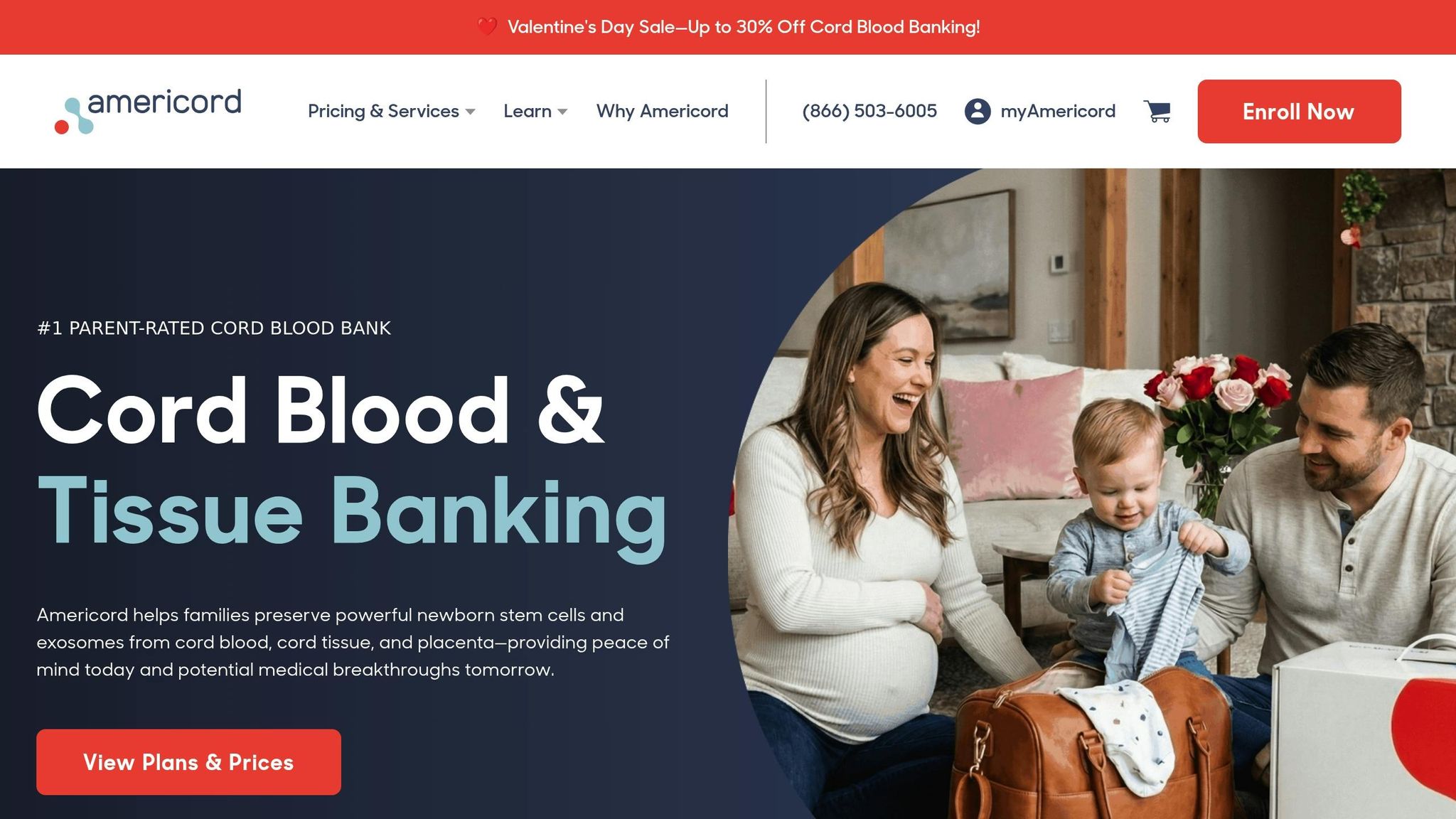
When it comes to emergencies, having reliable access to preserved stem cells can make all the difference. Americord Registry has earned its reputation as the #1 Parent-Rated Cord Blood Bank in the U.S., backed by glowing 5-star reviews, over 22,000 cryogenically stored units, and 12 successful releases since 2008.
To provide families with peace of mind, Americord offers a $110,000 Quality Guarantee. This guarantee covers the cost of finding an alternative stem cell source if a stored unit fails to engraft. Combined with advanced processing methods, Americord delivers both reliability and innovation.
CryoMaxx™ Processing Technology
Americord employs CryoMaxx™ Processing, an advanced manual manipulation technique that enhances the quality of hematopoietic stem cells. For cord and placental tissue, the process uses a "minimal manipulation" method, preserving the tissues as intact sheets across multiple vials. This approach helps maintain key multipotent cells, growth factors, and cytokines.
"CryoMaxx™ Processing maximizes stem cell usage and utility using a manual manipulation processing method, giving families more options for more treatments." – Americord Registry
Adding to its innovation, Americord uses a 5-compartment storage system. This allows portions of a sample to be used for up to five separate treatments, so families don’t need to thaw the entire collection at once. These advanced techniques are paired with flexible family plans to fit different budgets and medical needs.
Clear Pricing and Personal Support
Americord is committed to transparency, offering fixed-rate pricing with no hidden fees or annual increases. They even provide a price-match guarantee for written offers.
Families receive personalized guidance from dedicated Stem Cell Consultants, who offer free consultations to help select the best plan. After storage, families are given a detailed lab report confirming the collection’s viability. If the stem cells are needed for treatment or clinical trials, Americord’s Client Services team offers hands-on support to streamline the process.
For those enrolling within 48 hours of their due date, AmericordRush™ ensures collection kits arrive within 24 hours. Medical couriers are typically available to pick up the collection within a two-hour window after birth, ensuring a smooth and timely process during this critical moment.
How to Get Started with Stem Cell Banking
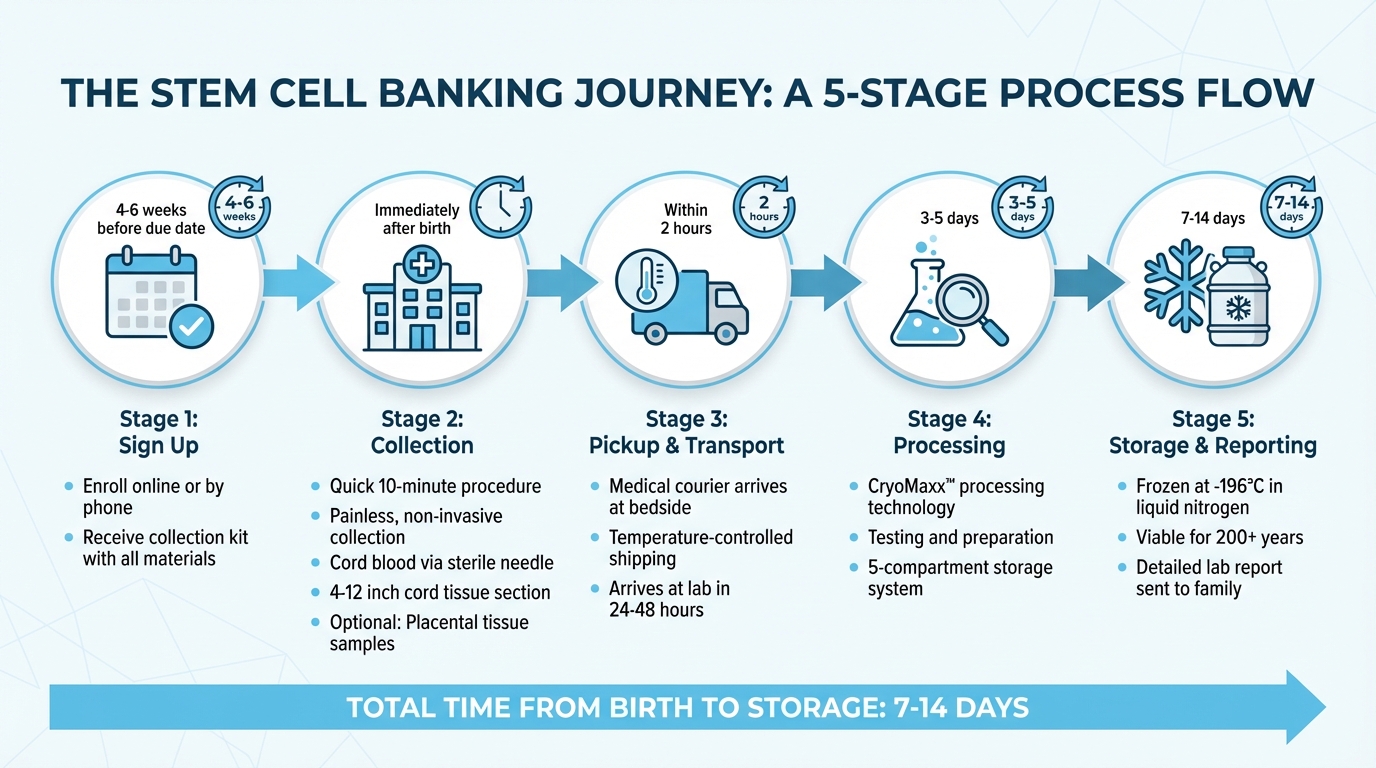
Stem Cell Banking Process: From Collection to Storage
The Collection and Storage Process
Getting started with Americord Registry is straightforward. Most families sign up about 4–6 weeks before their due date, either online or by calling to request a collection kit. This kit includes everything the medical team will need to collect cord blood, cord tissue, and placental tissue right after delivery.
The collection process itself is quick and happens immediately after birth, following cord clamping. A healthcare professional collects cord blood using a sterile needle inserted into the cord vein. They’ll also cut a 4–12 inch section of the umbilical cord for tissue collection. If you’ve opted for placental tissue banking, samples are taken from the placenta as well. The entire procedure takes less than 10 minutes, is completely painless, and doesn’t interfere with delivery or bonding time with your baby.
Once the collection is complete, you’ll call the number provided in the kit to arrange for pickup. Within two hours, a medical courier will arrive at your hospital bedside to collect the samples. These are shipped overnight in temperature-controlled containers and reach Americord’s lab within 24–48 hours. At the lab, the stem cells undergo CryoMaxx™ processing, which takes 3–5 days. Afterward, they’re frozen at –196°C in liquid nitrogen vapor storage using Americord’s specialized 5-compartment system. Within 7–14 days, you’ll receive a detailed lab report confirming the viability of the collected cells.
Once the collection and processing are successfully completed, the next step is selecting the storage plan that best suits your family’s needs.
Choosing the Right Plan for Your Family
With your stem cells safely stored, the next decision is selecting a plan that aligns with your family’s health goals. Americord offers a variety of tailored plans, ranging from options that focus solely on cord blood to more comprehensive packages that include cord tissue, placental tissue, and exosomes. Your choice will depend on factors like your family’s medical history and potential future needs. For example, cord blood contains hematopoietic stem cells, which are used to treat blood and immune disorders, while cord tissue and placental tissue provide mesenchymal stem cells that aid in repairing bone, cartilage, and organs.
Americord’s Stem Cell Consultants can guide you through the available plans and payment options to find the best fit for your budget and long-term goals. You can choose from annual storage, 20-year plans, or lifetime plans. If you’re considering locking in a plan, now might be a good time - there’s currently a February 2026 promotion offering 15% off multi-service 20-year plans and 30% off lifetime plans. This could be an excellent opportunity to invest in your family’s future health security.
Conclusion: Prepare Your Family for Medical Emergencies
Medical emergencies can strike without warning, affecting families in ways they never anticipated. Conditions like blood cancers, sickle cell disease, autoimmune disorders such as multiple sclerosis, or neurological illnesses can suddenly reshape lives. When conventional treatments fail, stem cell therapies can provide a vital alternative - but only if the cells are readily available. Banking your newborn's stem cells secures a safety net for such critical moments.
This decision comes with tangible advantages. Stem cells are approved to treat over 80 diseases by the FDA, and estimates suggest that 1 in 3 Americans could benefit from regenerative medicine or stem cell transplants during their lifetime. For instance, cord blood transplants often achieve better outcomes for blood cancers compared to adult stem cell sources, with lower rejection rates and fewer complications like graft-versus-host disease. Real-life cases, such as 5-year-old Olivia Fohs, highlight these benefits. In January 2019, she underwent a quick 15-minute procedure using her own banked cord blood stem cells, which significantly improved her condition.
Americord Registry supports families in taking this proactive step with its CryoMaxx™ processing technology. This method preserves the full potential of stem cells at –196°C, ensuring decades of storage without compromising viability. Their innovative 5-compartment storage system allows for multiple uses from a single collection, and the $110,000 engraftment guarantee provides added peace of mind if the cells fail to engraft. With flexible family plans, clear pricing in U.S. dollars, and personalized guidance from dedicated Stem Cell Consultants, families can select storage options that fit their needs, whether for annual or lifetime plans.
The collection process is quick, painless, and happens immediately after birth, ensuring your child’s genetic profile is preserved for future treatments. This straightforward approach guarantees that, in a medical emergency, your family has immediate and reliable access to life-saving therapies. Banking stem cells isn’t just a precaution - it’s a commitment to being prepared when it matters most.
FAQs
What’s the difference between stem cells from cord blood and bone marrow transplants?
Stem cells from cord blood and bone marrow are both vital in treating blood-related illnesses, but they differ significantly in their collection methods and applications.
Cord blood stem cells are collected painlessly from the umbilical cord right after birth. These cells are packed with hematopoietic stem cells (HSCs), which can transform into various blood components. This makes them highly effective for treating conditions like leukemia, lymphoma, and some genetic disorders. Cord blood also has the advantage of being easy to store for future use and carries a reduced risk of graft-versus-host disease.
In contrast, bone marrow stem cells are taken directly from the hip bone through a more invasive procedure. While they’ve been a traditional choice for transplants addressing similar conditions, they often require a close genetic match between the donor and recipient, which can make finding a suitable donor more challenging.
Cord blood banking offers families a forward-thinking option by storing stem cells for potential future medical needs. This ensures access to a valuable resource for unexpected health issues and contributes to ongoing advancements in regenerative treatments.
What are the long-term advantages of storing stem cells for future medical needs?
Banking stem cells gives families a chance to prepare for future medical needs by preserving a resource that could potentially save lives. Stem cells collected from sources like cord blood, cord tissue, or placental tissue have already been approved by the FDA to treat over 80 conditions, including blood disorders, immune system deficiencies, and certain types of cancer. Researchers are also exploring their potential in addressing conditions such as cerebral palsy, diabetes, and heart disease.
By storing these cells, families secure access to them for decades, providing peace of mind and flexibility as medical advancements continue to expand their potential applications. Taking this step could be crucial in accessing advanced treatments when they’re needed the most.
Does collecting stem cells during birth affect the delivery or postpartum experience?
The process of collecting stem cells is completely safe and painless, posing no interference with delivery or the immediate postpartum experience. Once the baby is born and the umbilical cord is clamped and cut, blood is collected from the cord. This step is standard and doesn’t disrupt the birth plan in any way.
The procedure is quick and minimally invasive, ensuring it won’t interfere with bonding time between mother and baby or the natural rhythm of postpartum care. Families have the opportunity to store these stem cells for potential future medical use without impacting the delivery or recovery process.
The views, statements, and pricing expressed are deemed reliable as of the published date. Articles may not reflect current pricing, offerings, or recent innovations.


